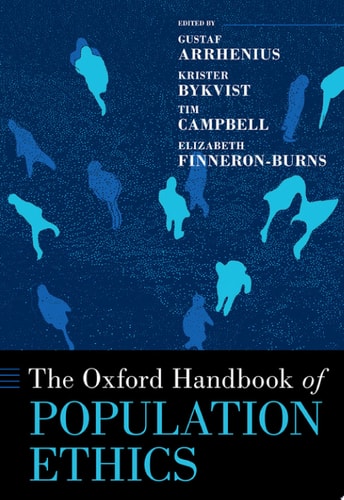
The Oxford Handbook of Population Ethics
0
0
As an Amazon Associate and affiliate partner, Menrva Books earns from qualifying purchases. Learn more
Author Description
The Oxford Handbook of Population Ethics presents up-to-date theoretical analyses of various problems associated with the moral standing of future people and animals in current decision-making. Future people pose an especially hard problem for our current decision-making, since their number and their identities are not fixed but depend on the choices the present generation makes. Do we make the world better by creating more people with good lives? What do we owe future generations in terms of justice? How should burdens and benefits be shared across generations so that justice prevails? These questions are philosophically difficult and important, but also directly relevant to many practical decisions and policies. Climate change policy provides an example, as the increasing global temperature will kill some people and prevent many others from ever existing. Many other policies also influence the size and make-up of future populations both directly and indirectly, for example those concerning family planning, child support, and prioritization in health-care. If we are to adequately assess these policies, we must be able to determine the value of differently sized populations.The essays in this handbook shed light on the value of population change and the nature of our obligations to future generations. It brings together world-leading philosophers to introduce readers to some of the paradoxes of population ethics, challenge some fundamental assumptions that may be taken for granted in the debate about the value of population change, and apply these problems and assumptions to real-world decisions.
Menrva's Summary
THE THESIS
How should current generations evaluate the moral standing, identity, and welfare of future populations when our present choices dictate their very existence and quality of life? This volume, edited by a team of prominent philosophers including Elizabeth Finneron-Burns and Gustaf Arrhenius, compiles rigorous theoretical analyses to address the paradoxes inherent in population ethics. The contributors utilize formal logic, normative theory, and applied ethics to examine how policy decisions regarding climate change, healthcare, and family planning impact the value and composition of future human and animal populations.
THE SCOPE MAP
What You Will Find
- Theoretical frameworks for evaluating population size and welfare
- Analyses of intergenerational justice and the distribution of burdens
- Discussions on the moral status of future people and non-human animals
- Applications of ethical theory to real-world policy dilemmas
Scope Limits
- Does not provide a singular, unified solution to population ethics paradoxes
- Focuses primarily on philosophical and normative analysis rather than empirical demographic forecasting
THE AUTHORITY PERSPECTIVE
Experts identify this handbook as a comprehensive reference for scholars and advanced students navigating the complexities of intergenerational ethics. Readers frequently note the high level of academic density and the rigorous analytical approach required to engage with the contributors' arguments.
Page Count:
648
Publication Date:
2022-04-08
Publisher:
Oxford University Press
ISBN-10:
0190907681
ISBN-13:
9780190907686
Philosophy
Academic
Ethics
Public Policy
Community Tags
Other Editions(2)
Similar Books




Reader Comments
Share Your Thoughts
No comments yet. Be the first to share your thoughts!