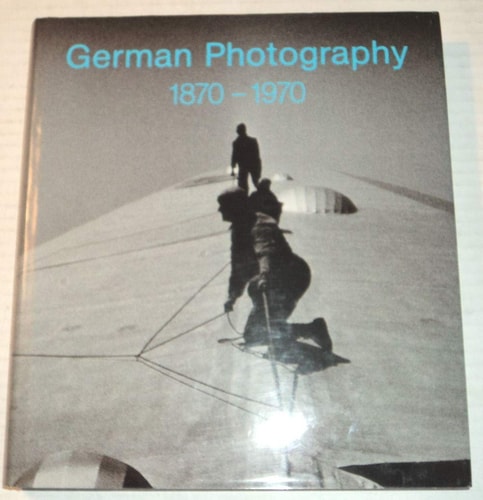
Deutsche Fotografie: Macht Eines Mediums 1870-1970
0
0
As an Amazon Associate and affiliate partner, Menrva Books earns from qualifying purchases. Learn more
Author Description
German photography of the late nineteenth and twentieth centuries has long been overshadowed by other forms of German art produced during this period. Yet many German photographers working then -- August Sander, meticulous recorder of life in Cologne; various photographers who have been linked to the Bauhaus movement; the mostly Jewish photojournalists of the golden twenties; and more recently, Hilla and Bernd Becher, with their series of pithead frames and water towers -- are justly renowned for their work. This superbly illustrated book examines the different levels and purposes of German photography from 1870 to 1970: art, photojournalism, propaganda, advertising, and architectural and fashion photography. Setting the historical background before which the use and abuse of photography takes place, the authors examine the extent that photography was influenced by the German nationalist movement, the changes it underwent during the reign of Kaiser Wilhelm II, its links to the avant garde movements, and its development through the world wars and the Cold War. The authors reveal new and astonishing insights into such subjects as the influence of Soviet, Hungarian, and Czech photography in the Weimar Republic, the role of photography in Nazi propaganda, the depiction of Jewish life during the Third Reich in private and official photographs, and the different uses of photography in both German states after World War II. With biographies of all photographers of major importance and hundreds of photographs in color and black and white, the book is a treasure trove for all lovers of photography and German culture. This book is the catalogue for an exhibition that takes place in theKunst- und Ausstellungshalle in Bonn, Germany, from May to August 1997.
Menrva's Summary
THE THESIS
This book investigates the multifaceted role and evolution of German photography from 1870 to 1970, a medium often overshadowed by other German art forms of the era. The authors explore photography's use and abuse across various domains including art, photojournalism, propaganda, advertising, and architectural and fashion photography. They examine the historical backdrop, tracing influences from German nationalism, the changes during Kaiser Wilhelm II's reign, connections to avant-garde movements, and its development through the World Wars and the Cold War. The book also reveals insights into the impact of Soviet, Hungarian, and Czech photography in the Weimar Republic, the function of photography in Nazi propaganda, the depiction of Jewish life, and its varied applications in both East and West Germany post-WWII.
THE SCOPE MAP
- An examination of German photography from 1870 to 1970, covering art, photojournalism, propaganda, advertising, and architectural/fashion photography.
- Historical context including the influence of German nationalism, the Wilhelminian era, avant-garde movements, and post-war developments.
- Analysis of photography's role in Nazi propaganda and the depiction of Jewish life.
- Exploration of international influences, such as Soviet, Hungarian, and Czech photography in the Weimar Republic.
- Biographies of significant photographers.
- Hundreds of photographs in color and black and white.
- Details on the exhibition held at the Kunst
- und Ausstellungshalle in Bonn, Germany, from May to August 1997.
THE AUTHORITY PERSPECTIVE
This book is regarded as a comprehensive survey of German photography during a pivotal century, offering significant insights into a medium often overlooked in favor of other German art forms. It is noted for its detailed examination of photography's diverse applications, from artistic expression to propaganda and commercial use. The inclusion of historical context, international influences, and biographical information on key photographers makes it a valuable resource. The extensive collection of both color and black-and-white photographs further enhances its appeal to enthusiasts of photography and German culture.
Page Count:
323
Publication Date:
1997-01-01
Publisher:
DuMont
ISBN-10:
0300071728
ISBN-13:
9780300071726
Architecture
Non-Fiction
Art
Photography
History
Fashion
Propaganda
Art History
Advertising
German Culture
Community Tags
Similar Books














Reader Comments
Share Your Thoughts
No comments yet. Be the first to share your thoughts!