The Internet and Political Protest in Autocracies
0
0
As an Amazon Associate and affiliate partner, Menrva Books earns from qualifying purchases. Learn more
Author Description
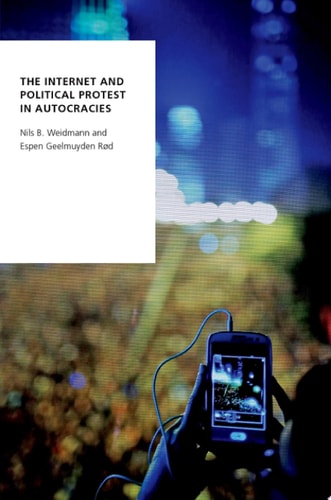
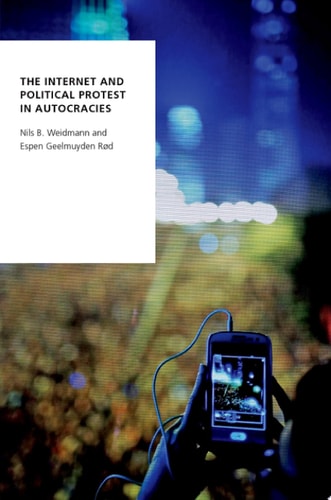
Eight Years After The Arab Spring There Is Still Much Debate Over The Link Between Internet Technology And Protest Against Authoritarian Regimes. While The Debate Has Advanced Beyond The Simple Question Of Whether The Internet Is A Tool Of Liberation Or One Of Surveillance And Propaganda, Theory And Empirical Data Attesting To The Circumstances Under Which Technology Benefits Autocratic Governments Versus Opposition Activists Is Scarce. In This Book, Nils B. Weidmann And Espen Geelmuyden Rød Offer A Broad Theory About Why And When Digital Technology Is Used For One End Or Another, Drawing On Detailed Empirical Analyses Of The Relationship Between The Use Of Internet Technology And Protest In Autocracies. By Leveraging New Sub-national Data On Political Protest And Internet Penetration, They Present Analyses At The Level Of Cities In More Than 60 Autocratic Countries. The Book Also Introduces A New Methodology For Estimating Internet Use, Developed In Collaboration With Computer Scientists And Drawing On Large-scale Observations Of Internet Traffic At The Local Level. Through This Data, The Authors Analyze Political Protest As A Process That Unfolds Over Time And Space, Where The Effect Of Internet Technology Varies At Different Stages Of Protest. They Show That Violent Repression And Government Institutions Affect Whether Internet Technology Empowers Autocrats Or Activists, And That The Effect Of Internet Technology On Protest Varies Across Different National Environments.
Menrva's Summary
THE THESIS
This book investigates the conditions under which digital technology serves as a tool for either democratic mobilization or autocratic control in authoritarian regimes. Nils B. Weidmann and Espen Geelmuyden Rød, both scholars in political science and conflict research, synthesize theoretical frameworks with extensive empirical data to explain the dual-use nature of the internet. They argue that the impact of digital connectivity is not uniform but contingent upon specific institutional environments and the tactical stages of political protest.
THE SCOPE MAP
What You Will Find
- Sub-national data analysis covering cities in over 60 autocratic countries.
- A novel methodology for estimating local internet usage through large-scale traffic observations.
- Longitudinal analysis of protest dynamics across time and space.
Scope Limits
- The study focuses specifically on autocratic regimes and does not analyze democratic protest movements.
- The methodology relies on technical internet traffic data, which may be subject to regional infrastructure limitations.
THE AUTHORITY PERSPECTIVE
Experts recognize this work as a significant contribution to the study of digital authoritarianism due to its rigorous sub-national data approach. Readers frequently note the academic density of the prose, which is tailored for researchers and students of political technology.
Page Count:
256
Publication Date:
2019-01-01
Publisher:
Oxford University Press
ISBN-10:
0190918322
ISBN-13:
9780190918323
Sociology
Autocracy
International relations
Technology
Digital Media
Community Tags
Similar Books