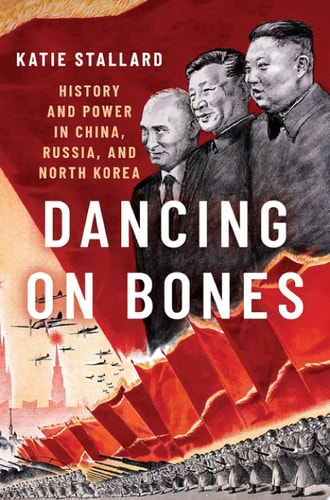
Dancing on Bones: History and Power in China, Russia and North Korea
0
0
As an Amazon Associate and affiliate partner, Menrva Books earns from qualifying purchases. Learn more
Author Description
History didn't end. Democracy didn't triumph. America's leading role in the world is no longer assured. Instead, autocrats and populist strongmen are on the rise, and the global order established after 1945 is under attack. This is the phenomenon Katie Stallard tackles in Dancing on Bones, as she examines how the leaders of China, Russia, and North Korea manipulate the past to serve the present and secure the future of authoritarian rule.Russia has annexed Crimea, started a war in eastern Ukraine, and repeatedly massed troops on its borders. China has stepped up war games near Taiwan and militarized the South China Sea, while North Korea has resumed missile testing and blood-curdling threats against the United States. These three states consistently top lists of threats to US and European security, and yet the leaders of all three insist that it is their country that is threatened, rewriting history and exploiting the memory of the wars of the last century to justify their actions and shore up popular support. Since coming to power, Xi Jinping has almost doubled the length of China's World War II, Vladimir Putin has elevated the memory of the Great Patriotic War to the status of a national religion, and Kim Jong Un has invested vast sums in rebuilding war museums in his impoverished state, while those who try to challenge the official version of history are silenced and jailed. But this didn't start with Putin, Xi, and Kim, and it won't end with them.Drawing on first-hand, on-the-ground reporting, Dancing on Bones argues that if we want to understand where these three nuclear powers are heading, we must understand the stories they are telling their citizens about the past.
Menrva's Summary
THE THESIS
How do authoritarian regimes in China, Russia, and North Korea weaponize historical narratives to maintain domestic control and justify aggressive foreign policies? Katie Stallard, a seasoned journalist with extensive on-the-ground experience in these regions, investigates the systematic manipulation of collective memory. She argues that these states utilize the legacy of 20th-century conflicts to construct national identities that prioritize regime survival over democratic norms, effectively turning history into a tool of statecraft.
THE SCOPE MAP
What You Will Find
- Comparative analysis of historical revisionism in China, Russia, and North Korea.
- Examination of state-sponsored war museums and commemorative rituals as political instruments.
- First-hand reporting and interviews conducted within the borders of the three nations.
- Analysis of how Xi Jinping, Vladimir Putin, and Kim Jong Un utilize past conflicts to legitimize current authoritarian actions.
THE AUTHORITY PERSPECTIVE
Experts and political analysts frequently highlight this work as a vital examination of the intersection between historical memory and modern geopolitical strategy. Readers often note the clarity of the prose, which makes complex political maneuvers accessible to a general audience while maintaining academic rigor.
Page Count:
300
Publication Date:
2022-01-01
Publisher:
Oxford University Press
ISBN-10:
0197575374
ISBN-13:
9780197575376
History
North Korea
International relations
China
Eastern Europe
Autocracy
Russia
Geopolitics
Community Tags
Similar Books