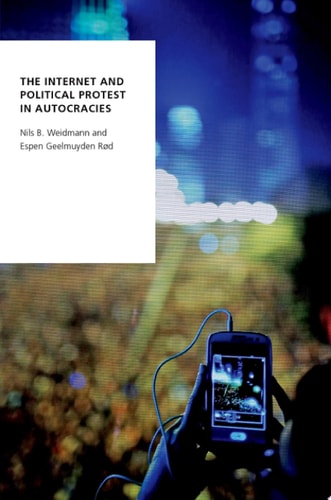
The Internet and Political Protest in Autocracies
0
0
As an Amazon Associate and affiliate partner, Menrva Books earns from qualifying purchases. Learn more
Author Description
In The Aftermath Of Recent Popular Uprisings In Dictatorships, Many Observers Argued That Information And Communication Technologies, Notably The Internet, Played A Key Role In The Mobilization Of Political Protest. This Text Unpacks When And Under Which Circumstances Internet Technology Can Benefit Opposition Activists Aiming To Mobilize Protests, And When The Technology Plays Into The Hands Of Autocratic Governments.
Menrva's Summary
THE THESIS
This book investigates the dual-use nature of internet technology in autocratic regimes, specifically questioning whether digital tools facilitate democratic mobilization or enhance state surveillance and control. The authors, Espen Geelmuyden Rød and Nils B. Weidmann, utilize a combination of quantitative data analysis and comparative case studies to examine the strategic interactions between opposition activists and authoritarian governments. They argue that the impact of the internet is not uniform but contingent upon the specific political environment and the state's capacity for digital repression.
THE SCOPE MAP
What You Will Find
- Analysis of the mobilization potential of social media and communication platforms.
- Examination of state-led digital censorship and surveillance tactics.
- Theoretical framework for understanding the strategic use of information technology in non-democratic contexts.
Scope Limits
- The text does not provide a comprehensive history of every global uprising.
- It does not offer specific technical manuals for bypassing firewalls or encryption tools.
THE AUTHORITY PERSPECTIVE
Experts in political science and digital sociology frequently cite this work for its balanced approach to the 'liberation technology' versus 'dictator's tool' debate. Readers often note the academic density of the prose, which makes it a foundational text for those studying the intersection of technology and political stability.
Page Count:
205
Publication Date:
1900-01-01
ISBN-10:
0190918349
ISBN-13:
9780190918347
Autocracy
Technology and Society
International relations
Community Tags
Similar Books