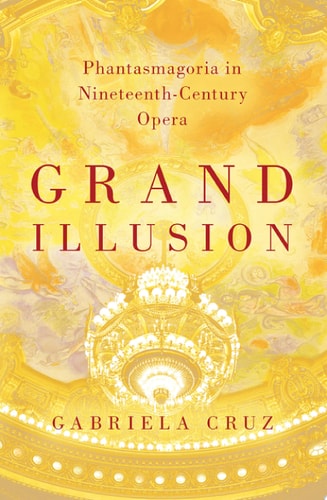
Grand Illusion
0
0
As an Amazon Associate and affiliate partner, Menrva Books earns from qualifying purchases. Learn more
Author Description
A New And Groundbreaking Approach To The History Of Grand Opera, Grand Illusion: Phantasmagoria In Nineteenth-century Opera Explores The Illusion And Illumination Behind The Form's Rise To Cultural Eminence. Renowned Opera Scholar Gabriela Cruz Argues That Grand Opera Worked To Awaken Memory And Feeling In A Way Never Before Experienced In The Opera House, Asserting That The Concept Of Spectacle Was The Defining Cultural Apparatus Of The Art Form After The 1820s. Parisian Audiences At The Académie Royale De Musique Were Struck By The Novelty And Power Of Grand Opera Upon The Introduction Of Gaslight Illumination, A Technological Innovation That Quickly Influenced Productions Across The Western Operatic World. With This Innovation, Grand Opera Transformed Into An Audio-visual Spectacle, Delivering Dream-like Images And Evoking The Ghosts Of Its Audiences' Past. Through Case Studies Of Operas By Giacomo Meyerbeer, Richard Wagner, And Giuseppe Verdi, Cruz Demonstrates How These Works Became An Increasingly Sophisticated Medium By Which Audiences Could Conjure Up The Past And Be Transported Away From The Breakdown Of Modern Life. A Historically Informed Narrative That Traverses Far And Wide, From Dingy Popular Theatres In Post-revolutionary Paris, To Nautical Shows In London, And Finally To Egyptian Mummies, Grand Illusion Provides A Fresh Departure From Previous Scholarship, Highlighting The Often-neglected Visual Side Of Grand Opera.
Menrva's Summary
THE THESIS
This book investigates how the integration of gaslight technology and visual spectacle transformed nineteenth-century grand opera into a medium for collective memory and emotional immersion. Gabriela Cruz, a scholar of operatic history, utilizes archival research and production analysis to argue that the shift toward high-tech visual effects was the primary driver of the genre's cultural dominance. She posits that these productions functioned as a psychological apparatus, allowing audiences to navigate the anxieties of modern life through the conjuring of historical and dream-like imagery.
THE SCOPE MAP
What You Will Find
- Analysis of the impact of gaslight illumination on theatrical production.
- Comparative studies of works by Giacomo Meyerbeer, Richard Wagner, and Giuseppe Verdi.
- Examination of the transition from popular theater aesthetics to high-culture operatic spectacle.
- Historical context regarding the evolution of visual technology in the nineteenth-century Western world.
Scope Limits
- The text focuses primarily on the visual and technological aspects of grand opera rather than a comprehensive musical analysis of the scores.
- The scope is limited to the period following the 1820s and the specific influence of the Académie Royale de Musique.
THE AUTHORITY PERSPECTIVE
Scholars and musicologists frequently note the book's success in shifting the focus of operatic study toward the visual and material conditions of performance. Experts highlight this as a significant contribution to the field for its ability to connect technological innovation with the psychological experience of the nineteenth-century audience.
Page Count:
272
Publication Date:
2020-01-01
Publisher:
Oxford University Press
ISBN-10:
0190915064
ISBN-13:
9780190915063
Opera
Music History
Art History
Cultural History
Nineteenth century
Community Tags
Similar Books