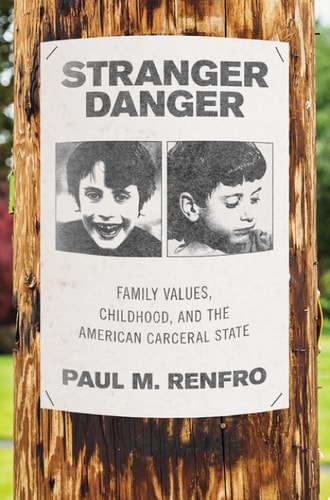
Stranger Danger: Family Values, Childhood, and the American Carceral State
0
0
As an Amazon Associate and affiliate partner, Menrva Books earns from qualifying purchases. Learn more
Author Description
Beginning with Etan Patz's disappearance in Manhattan in 1979, a spate of high-profile cases of missing and murdered children stoked anxieties about the threats of child kidnapping and exploitation. Publicized through an emerging twenty-four-hour news cycle, these cases supplied evidence of what some commentators dubbed "a national epidemic" of child abductions committed by "strangers." In this book, Paul M. Renfro narrates how the bereaved parents of missing and slain children turned their grief into a mass movement and, alongside journalists and policymakers from both major political parties, propelled a moral panic. Leveraging larger cultural fears concerning familial and national decline, these child safety crusaders warned Americans of a supposedly widespread and worsening child kidnapping threat, erroneously claiming that as many as fifty thousand American children fell victim to stranger abductions annually. The actual figure was (and remains) between one hundred and three hundred, and kidnappings perpetrated by family members and acquaintances occur far more frequently. Yet such exaggerated statistics-and the emotionally resonant images and narratives deployed behind them-led to the creation of new legal and cultural instruments designed to keep children safe and to punish the "strangers" who ostensibly wished them harm. Ranging from extensive child fingerprinting drives to the milk carton campaign, from the AMBER Alerts that periodically rattle Americans' smart phones to the nation's sprawling system of sex offender registration, these instruments have widened the reach of the carceral state and intensified surveillance practices focused on children. Stranger Danger reveals the transformative power of this moral panic on American politics and culture, showing how ideas and images of endangered childhood helped build a more punitive American state.
Menrva's Summary
THE THESIS
This book investigates how the moral panic surrounding child abductions in the late 20th century facilitated the expansion of the American carceral state and intensified surveillance practices. Paul M. Renfro, a historian, utilizes a combination of media analysis, legislative history, and sociological data to argue that exaggerated fears of stranger danger were leveraged by activists and politicians to justify punitive policies. By contrasting the actual statistical reality of child abductions with the public perception fueled by media campaigns, the author demonstrates how the protection of childhood became a vehicle for broader political and social control.
THE SCOPE MAP
What You Will Find
- Analysis of the 1979 Etan Patz case and its role in shaping public perception.
- Examination of the milk carton campaign and the rise of the 24-hour news cycle.
- Evaluation of the legislative impact of child safety crusades on sex offender registration.
- Critique of the discrepancy between reported abduction statistics and actual crime data.
Scope Limits
- The text does not provide a comprehensive history of all child welfare policies in the United States.
- The analysis focuses primarily on the American context and does not compare these trends to international child safety movements.
THE AUTHORITY PERSPECTIVE
Scholars and historians frequently cite this work as a rigorous examination of how moral panics influence public policy and state surveillance. Readers often note the academic density of the prose, which provides a detailed look at the intersection of media, politics, and criminal justice.
Page Count:
309
Publication Date:
2020-01-01
Publisher:
Oxford University Press
ISBN-10:
0190914009
ISBN-13:
9780190914004
History
Sociology
Educational Foundations
Criminology
History of the Americas
Minority Studies
Special Topics
American Studies
Professional Career & Trade
Community Tags
Similar Books