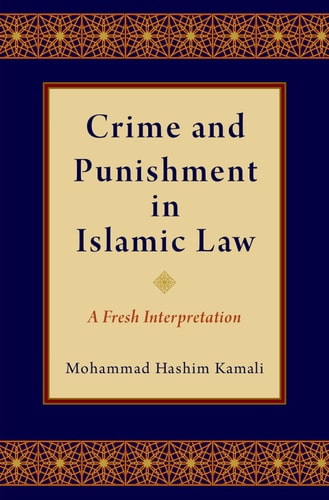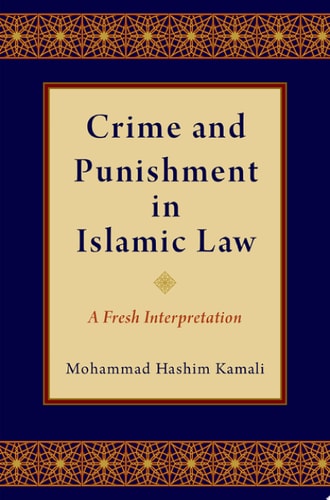
Crime And Punishment In Islamic Law
0
0
As an Amazon Associate and affiliate partner, Menrva Books earns from qualifying purchases. Learn more
Author Description
In Crime And Punishment In Islamic Law: A Fresh Interpretation, Mohammad Kamali Considers Problems Associated With And Proposals For Reform Of The Hudud Punishments Prescribed By Islamic Criminal Law, And Other Topics Related To Crime And Punishment In Shariah. He Examines What The Qur'an And Hadith Say About Hudud Punishments, As Well As Just Retaliation (qisas), And Discretionary Punishments (ta'zir), And Looks At Modern-day Applications Of Islamic Criminal Law In 15 Muslim Countries. Particular Attention Is Given To Developments In Malaysia, A Multi-religious Society, Federal State, And Self-described Democracy, Where A Lively Debate About Hudud Has Been On-going For The Last Three Decades. Malaysia Presents A Particularly Interesting Case Study Of How A Reasonably Successful Country With A Market Economy, High Levels Of Exposure To The Outside World, And A Credible Claim To Inclusivity, Deals With Islamic And Shariah-related Issues. Kamali Concludes That There Is A Significant Gap Between The Theory And Practice Of Hudud In The Scriptural Sources Of Shariah And The Scholastic Articulations Of Jurisprudence Of The Various Schools Of Islamic Law, Arguing That Literalism Has Led To Such Rigidity As To Make Islamic Criminal Law Effectively A Dead Letter. His Goal Is To Provide A Fresh Reading Of The Sources Of Shariah And Demonstrate How The Qur'an And Sunnah Can Show The Way Forward To Needed Reforms Of Islamic Criminal Law.
Menrva's Summary
THE THESIS
This work investigates the disconnect between classical Islamic jurisprudence regarding criminal punishments and the contemporary application of these laws in modern Muslim-majority states. Mohammad Hashim Kamali, a scholar of Islamic law, utilizes a rigorous analysis of primary scriptural sources—specifically the Qur'an and Hadith—to challenge rigid interpretations of Hudud punishments. He argues that a literalist approach has stifled the evolution of Islamic criminal law, proposing instead a re-evaluation of the sources to facilitate necessary legal reforms.
THE SCOPE MAP
What You Will Find
- Comparative analysis of Hudud, qisas, and ta'zir punishments
- Examination of Islamic criminal law applications across 15 Muslim countries
- Detailed case study of the legal and political debates in Malaysia
- Critical review of the gap between scriptural theory and scholastic jurisprudence
Scope Limits
- Does not provide a comprehensive global history of all Islamic legal schools
- Does not offer a definitive legislative draft for universal implementation
THE AUTHORITY PERSPECTIVE
Scholars and legal practitioners frequently cite this work as a significant contribution to the discourse on modernizing Shariah-based legal systems. Experts highlight the text as a balanced, academic resource for understanding the complexities of reconciling traditional Islamic jurisprudence with contemporary democratic and human rights frameworks.
Page Count:
496
Publication Date:
2019-01-01
Publisher:
Oxford University Press
ISBN-10:
0190910658
ISBN-13:
9780190910655
Religion
Middle Eastern
Islamic Studies
Law
Community Tags
Similar Books