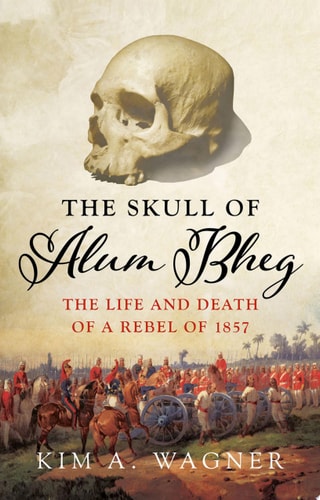
The Skull of Alum Bheg
0
0
As an Amazon Associate and affiliate partner, Menrva Books earns from qualifying purchases. Learn more
Author Description
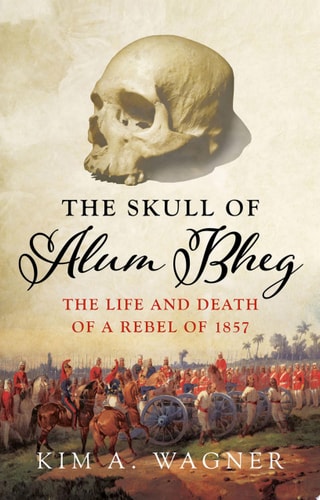
In 1963, a human skull was discovered in a pub in Kent in south-east England. A brief handwritten note stuck inside the cavity revealed it to be that of Alum Bheg, an Indian soldier in British service who was executed during the aftermath of the 1857 uprising, or the Indian Mutiny as historians of an earlier era described it. Alum Bheg was blown from a cannon for having allegedly murdered British civilians, and his head was brought back as a grisly war-trophy by an Irish officer present at his execution. The skull is a troublesome relic of both anti-colonial violence and the brutality and spectacle of British retribution. Kim Wagner presents an intimate and vivid account of life and death in British India in the throes of the largest rebellion of the nineteenth century. Fugitive rebels spent months, even years, hiding in the vastness of the Himalayas before they were eventually hunted down and punished by a vengeful colonial state. Examining the colonial practice of collecting and exhibiting human remains, this book offers a critical assessment of British imperialism that speaks to contemporary debates about the legacies of empire and the myth of the 'mutiny'.
Menrva's Summary
THE THESIS
This book investigates the historical trajectory and symbolic significance of a single human skull to critique the broader mechanisms of British imperial violence and the colonial practice of collecting human remains. Kim Wagner, a historian specializing in the British Empire and colonial India, utilizes the specific case of Alum Bheg—an Indian soldier executed in 1857—to anchor a wider analysis of the Indian Rebellion. By tracing the provenance of this war trophy, the author challenges traditional narratives surrounding the 1857 uprising and the brutal nature of colonial retribution.
THE SCOPE MAP
What You Will Find
- A detailed micro-history of Alum Bheg and the aftermath of the 1857 Indian Rebellion.
- An analysis of the colonial practice of collecting and displaying human remains as war trophies.
- A critical examination of the myth of the 'mutiny' and the reality of anti-colonial resistance.
Scope Limits
- The book does not provide a comprehensive military history of every battle during the 1857 uprising.
- It does not focus on the personal lives of the British officers beyond their roles in the execution and collection of the relic.
THE AUTHORITY PERSPECTIVE
Experts recognize this work as a significant contribution to the study of colonial violence and the material culture of imperialism. Readers frequently note the academic rigor and the unsettling nature of the subject matter, which effectively connects historical artifacts to contemporary discussions on the legacies of empire.
Page Count:
335
Publication Date:
2018-01-01
Publisher:
Oxford University Press
ISBN-10:
0190911425
ISBN-13:
9780190911423
History
British Empire
Colonialism
Military History
India
19th Century
Community Tags
Similar Books