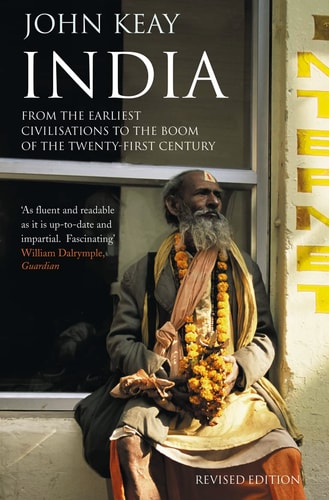
India: A History
0
0
As an Amazon Associate and affiliate partner, Menrva Books earns from qualifying purchases. Learn more
Author Description
A new edition of the most authoritative and highly-regarded single-volume history of India. Fully revised to include the most recent research and to cover events from partition to the present day. In 'India: A History' five millennia of the sub-continent's history are interpreted by one of our finest writers on India and the Far East. This definitive work combines narrative pace and skill with social, economic and cultural analysis. India's history begins with a highly advanced urban civilisation in the Indus valley, regressing to a tribal and pastoral nomadism, and then evolving into a uniquely stratified society. The pattern of inward invasion plus outward migration was established early: from Alexander the Great via the march of Islam and the great Moghuls to the coming of the East India Company and the establishment of the British Raj. Older, richer and more distinctive than almost any other, India's culture furnishes all that the historian could wish for in the way of continuity and diversity. The peoples of the Indian subcontinent, while sharing a common history and culture, are not now, and never have been, a single unitary state; the book accommodates Pakistan and Bangladesh, as well as other embryonic nation states like the Sikh Punjab, Muslim Kashmir and Assam. In this brilliant new edition, John Keay continues the narrative of India's history -- covering events from partition to the present day and examining the very different fortunes of the three successor states: Pakistan, Bangladesh and the Republic of India. Based on the latest research, this is an indispensible history of a country set to be a definitive influence on the future of world economics, politics and culture.
Menrva's Summary
THE THESIS
How does the vast, complex, and multi-millennial history of the Indian subcontinent coalesce into a coherent narrative of continuity and diversity? John Keay, a seasoned historian and expert on the Far East, synthesizes archaeological evidence, socio-economic data, and political chronicles to trace the evolution of India from the Indus Valley civilization to the modern era. The work argues that India’s identity is defined not by a single unitary state, but by a persistent pattern of migration, invasion, and cultural stratification that continues to shape the contemporary geopolitical landscape of India, Pakistan, and Bangladesh.
THE SCOPE MAP
What You Will Find
- A comprehensive chronological survey spanning five millennia of history.
- Analysis of the transition from the Indus Valley civilization to the British Raj and the post-partition era.
- Examination of the distinct socio-political trajectories of India, Pakistan, and Bangladesh.
- Integration of cultural, economic, and social history alongside traditional political narratives.
THE AUTHORITY PERSPECTIVE
This work is widely regarded as a standard, authoritative single-volume reference for students and general readers seeking a comprehensive overview of the region. The text is noted for its narrative clarity and its ability to balance broad historical trends with the intricate details of a diverse and evolving subcontinent.
Page Count:
608
Publication Date:
2010-01-01
Publisher:
HARPER COLLINS
ISBN-10:
0007307756
ISBN-13:
9780007307753
Non-Fiction
History
World history
Asia
Asian History
India
Community Tags
Other Editions(3)

Similar Books




Reader Comments
Share Your Thoughts
No comments yet. Be the first to share your thoughts!