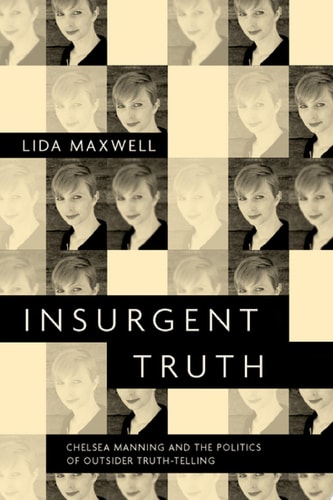
Insurgent Truth: Chelsea Manning and the Politics of Outsider Truth-Telling
0
0
As an Amazon Associate and affiliate partner, Menrva Books earns from qualifying purchases. Learn more
Author Description
When Chelsea Manning was arrested in May 2010 for leaking massive amounts of classified Army and diplomatic documents to WikiLeaks, she was almost immediately profiled by the mainstream press as a troubled person: someone who had experienced harassment due to her sexual orientation and gender non-conformity, and who leaked documents not on behalf of the public good, but out of motives of personal revenge or, as suggested in the New York Times, "delusions of grandeur." Compared implicitly to Daniel Ellsberg's apparently selfless devotion to the truth and the public good, Manning comes up short in these profiles--a failed whistleblower who deserves pity rather than political solidarity.The first book-length theoretical treatment of Manning's actions, Insurgent Truth argues for seeing Manning's example differently: as an act of what the book terms "outsider truth-telling." Bringing Manning's truth-telling into conversation with democratic, feminist, and queer theory, the book argues that outsider truth-tellers such as Manning tell or enact unsettling truths from a position of social illegibility. Challenging the social alignment of credibility with gendered, classed, and raced traits, outsider truth-tellers reveal oppression and violence that the dominant class would otherwise not see, and disclose the possibility of a more egalitarian form of life. Read as outsider truth-telling, the book argues that Manning's acts were not aimed at curbing corporate or governmental bad acts, but instead at transforming public discourse and agency, and inciting a solidaristic public. The book suggests that Manning's actions offer a productive example of democratic truth-telling for all of us.Lida Maxwell develops this argument through an examination of Manning's prison writings, the lengthy chat logs between Manning and the hacker who eventually turned her in, various journalistic, artistic, and academic responses to Manning, and by comparing Manning's example and writings with the wo
Menrva's Summary
THE THESIS
This book investigates the political significance of Chelsea Manning’s actions by framing them as a specific form of 'outsider truth-telling' that challenges traditional notions of credibility and public discourse. Lida Maxwell, a scholar of political theory, utilizes a framework that synthesizes democratic, feminist, and queer theory to re-evaluate Manning’s leaks. By moving beyond the mainstream media’s focus on Manning’s personal psychology, the author argues that these acts function as a mechanism for exposing systemic violence and inciting a more egalitarian public consciousness.
THE SCOPE MAP
What You Will Find
- Analysis of Manning's personal prison writings and private chat logs
- Theoretical application of queer and feminist frameworks to whistleblowing
- Comparative study of historical and contemporary truth-tellers
- Examination of journalistic and artistic responses to the Manning case
Scope Limits
- The text does not provide a comprehensive legal history of the military court-martial proceedings
- It avoids a purely biographical focus on Manning’s early life, prioritizing theoretical interpretation over narrative chronology
THE AUTHORITY PERSPECTIVE
Scholars and political theorists frequently note the dense, academic nature of the prose, which demands familiarity with critical theory. Experts highlight this as a significant contribution to the study of political agency and the ethics of dissent in the digital age.
Page Count:
224
Publication Date:
2019-06-28
Publisher:
Oxford University Press
ISBN-10:
0190920025
ISBN-13:
9780190920029
Biography
Whistleblowing
Queer Theory
Truth
Democracy
Gender Studies
Community Tags
Similar Books