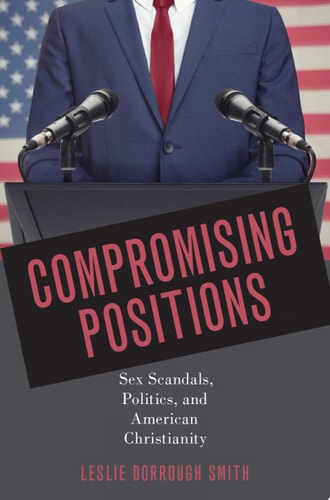
Compromising Positions: Sex Scandals, Politics, and American Christianity
0
0
As an Amazon Associate and affiliate partner, Menrva Books earns from qualifying purchases. Learn more
Author Description
Americans have long believed that the private lives of their politicians are important indicators of their fitness to lead and of their ability to defend and uphold American values. For many, a sex scandal renders a person ineligible, or at the very least questionably qualified, for public service. In Compromising Positions, Leslie Dorrough Smith questions the assumption that sex scandals are really about sex-- that is, that they are primarily concerned with the discovery of sexual misconduct. She argues that they are, instead, a form of cultural storytelling that uses racial and gendered symbols to create a collective sense of national worth and strength.Smith shows that sex scandals involve the use of four very powerful social tools--gender, race, politics, and religion-- that together create a rhetoric about what America is, who is eligible to formally represent it, and what types of symbolic religiosity such leaders must display to legitimize their power. Americans tend to condemn or excuse the sexual misdeeds of their politicians depending on the degree to which the individual in question reinforces evangelical interpretations of "American values" and a "Christian nation." Such values include not just moral integrity, but strength, courage, and conquest. As a consequence, sex scandals are less likely to occur in cultural moments when the public is open to reading a politician's moral lapse as a symbolic form of national dominance. Put simply, when a leader is perceived as strong, domineering, and necessary for national health, many people will find ways either to overlook his illicit sexual behavior or somehow read it as an American act.
Menrva's Summary
THE THESIS
This book investigates whether sex scandals in American politics are truly about sexual misconduct or if they function as a form of cultural storytelling used to define national identity and religious values. Leslie Dorrough Smith, a scholar of religious studies, utilizes a framework that integrates gender, race, politics, and religion to analyze how the American public evaluates the fitness of political leaders. She argues that these scandals are rhetorical tools used to reinforce specific evangelical interpretations of American strength and moral legitimacy. By examining public reactions to political misdeeds, the author demonstrates how sexual behavior is often reinterpreted through the lens of national dominance and symbolic religiosity.
THE SCOPE MAP
What You Will Find
- Analysis of the intersection between evangelical Christianity and political power in the United States.
- A rhetorical framework for interpreting how gender and racial symbols are deployed during political scandals.
- Examination of the conditions under which the public excuses or condemns the sexual behavior of political figures.
Scope Limits
- The text does not provide an exhaustive historical catalog of every American political sex scandal.
- It does not focus on the legal or legislative consequences of sexual misconduct in public office.
THE AUTHORITY PERSPECTIVE
Scholars and readers frequently note that this text provides a rigorous academic examination of the intersection between religious rhetoric and political culture. Experts highlight the book as a useful resource for understanding how moral narratives are constructed to maintain power dynamics in the American political landscape.
Page Count:
312
Publication Date:
2019-12-02
Publisher:
Oxford University Press
ISBN-10:
0190924071
ISBN-13:
9780190924072
Religion
Christianity and politics
Gender Studies
Evangelicalism
Sociology
Sex
Sex scandals
Politicians
Cultural History
American Studies
Community Tags
Similar Books