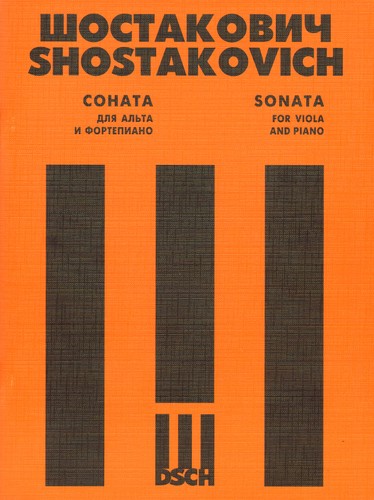
Sonata for Viola and Piano, Op. 147
0
0
As an Amazon Associate and affiliate partner, Menrva Books earns from qualifying purchases. Learn more
Author Description
Shostakovich's final work, written when the composer was in the grip of mortal illness, is one of the darkest works in his whole output and a classic of late 20th century chamber music. It is also one of the very few major compositions for viola and piano and therefore a major part of the violist's repertoire. The first movement -- Aria -- is a piece on an almost symphonic scale, a thrilling study in Shostakovich's most searching idiom, in which harmony and melody are drawn out to spine-chilling lengths. By contrast, the central movement is a transcription of a scene from the composer's long-abandoned opera, 'The Gamblers' (1942), inspired by Gogol's black comedy of brutal deception and murder. Shostakovich heads this movement with a famous quotation from Pushkin, the most beloved of Russian poets: 'The work of long-ago days...' The final movement, written in only 2 days and just a month or so before the composer's death, is a memorial 'to the great Beethoven' and begins with the famous opening arpeggios from the 'Moonlight Sonata.' - Repertoire note by Gerard McBurney at boosey.com
Menrva's Summary
THE THESIS
The Sonata for Viola and Piano, Op. 147, stands as Dmitri Shostakovich's final testament, a profound exploration of darkness and mortality. Composed during the composer's final illness, this work is a cornerstone of late 20th-century chamber music and a crucial piece for violists. The expansive first movement, 'Aria,' delves into Shostakovich's most introspective idiom, stretching harmony and melody to their limits. The central movement draws from an abandoned opera, 'The Gamblers,' and is prefaced by a Pushkin quote, while the finale, a memorial to Beethoven, incorporates motifs from the 'Moonlight Sonata.'
THE SCOPE MAP
- The complete musical score for Shostakovich's Sonata for Viola and Piano, Op. 147.
- Detailed musical notation for both viola and piano parts.
- The 'Aria' movement, characterized by its symphonic scale and searching harmonic language.
- The central movement, a transcription from the opera 'The Gamblers,' featuring a literary quotation.
- The final movement, a memorial to Beethoven, incorporating thematic elements from his 'Moonlight Sonata.'
- Contextual notes on the composition's background and significance, including its place in Shostakovich's oeuvre and the viola repertoire.
THE AUTHORITY PERSPECTIVE
As Shostakovich's final composition, the Sonata for Viola and Piano, Op. 147, is widely regarded as a work of immense emotional depth and musical significance. Its challenging yet rewarding nature has cemented its place as a staple in the repertoire for violists and pianists. The piece is frequently cited for its stark beauty and its poignant reflection of the composer's final days. The integration of diverse musical sources, from opera to homage, contributes to its complex and compelling structure.
Page Count:
0
Publication Date:
2016-01-01
ISBN-10:
1495094944
ISBN-13:
9781495094941
Music
Non-Fiction
Sheet Music
Viola
Chamber Music
Piano