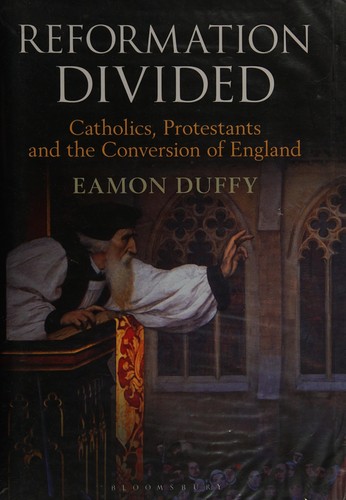
Reformation Divided
0
0
As an Amazon Associate and affiliate partner, Menrva Books earns from qualifying purchases. Learn more
Author Description
Published to mark the 500th anniversary of the events of 1517, Reformation Divided explores the impact in England of the cataclysmic transformations of European Christianity in the sixteenth and seventeenth centuries. The religious revolution initiated by Martin Luther is usually referred to as 'The Reformation', a tendentious description implying that the shattering of the medieval religious foundations of Europe was a single process, in which a defective form of Christianity was replaced by one that was unequivocally benign, 'the midwife of the modern world'. The book challenges these assumptions by tracing the ways in which the project of reforming Christendom from within, initiated by Christian 'humanists' like Erasmus and Thomas More, broke apart into conflicting and often murderous energies and ideologies, dividing not only Catholic from Protestant, but creating deep internal rifts within all the churches which emerged from Europe's religious conflicts. The book is in three parts: In 'Thomas More and Heresy', Duffy examines how and why England's greatest humanist apparently abandoned the tolerant humanism of his youthful masterpiece Utopia, and became the bitterest opponent of the early Protestant movement. 'Counter-Reformation England' explores the ways in which post-Reformation English Catholics accommodated themselves to a complex new identity as persecuted religious dissidents within their own country, but in a European context, active participants in the global renewal of the Catholic Church. The book's final section 'The Godly and the Conversion of England' considers the ideals and difficulties of radical reformers attempting to transform the conventional Protestantism of post-Reformation England into something more ardent and committed. In addressing these subjects, Duffy shines new light on the fratricidal ideological conflicts which lasted for more than a century, and whose legacy continues to shape the modern world. -
Menrva's Summary
THE THESIS
The book challenges the conventional narrative of the Reformation by exploring its divisive impact on European Christianity, particularly in England. Eamon Duffy, a distinguished historian, examines how the religious revolution initiated by Martin Luther, often simplistically termed 'The Reformation', fractured into conflicting ideologies. He investigates the transformation of Christian 'humanists' like Erasmus and Thomas More, the adaptation of English Catholics to a new identity, and the efforts of radical reformers to instill greater fervor in English Protestantism. The work illuminates the century-long ideological conflicts that continue to shape the modern world.
THE SCOPE MAP
- An examination of Thomas More's shift from tolerant humanism to opposition of the Protestant movement.
- An exploration of post-Reformation English Catholics' identity as dissidents and participants in the Catholic Church's renewal.
- An analysis of radical reformers' attempts to intensify Protestantism in England.
- Discussion of the fratricidal ideological conflicts stemming from the Reformation.
- Contextualization of England's religious transformations within broader European events of the sixteenth and seventeenth centuries.
THE AUTHORITY PERSPECTIVE
The book is a significant contribution to the study of the English Reformation, offering a nuanced perspective that moves beyond simplistic narratives of progress. Scholars are likely to appreciate Duffy's deep engagement with primary sources and his ability to synthesize complex theological and political developments. The work is recognized for its detailed analysis of the internal divisions within both Catholic and Protestant movements, highlighting the often violent nature of religious change. Its exploration of the lasting legacy of these conflicts provides a valuable framework for understanding contemporary religious and political landscapes.
Page Count:
441
Publication Date:
2017-01-01
ISBN-10:
1472934369
ISBN-13:
9781472934369
Religion
Non-Fiction
History
European History
British History
Religious History
Community Tags
Similar Books