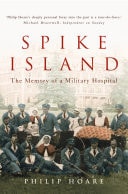
Spike Island: The Memory of a Military Hospital
0
0
As an Amazon Associate and affiliate partner, Menrva Books earns from qualifying purchases. Learn more
Author Description
This ebook contains a limited number of illustrations.The story of Netley in Southampton – its hospital, its people and the secret history of the 20th-century. Now with a new afterword uncovering astonishing evidence of Netley's links with Porton Down & experiments with LSD in the 1950s.It was the biggest hospital ever built. Stretching for a quarter of a mile along the banks of Southampton Water, the Royal Victoria Military Hospital at Netley was an expression of Victorian imperialism in a million red bricks, a sprawling behemoth so vast that when the Americans took it over in World War II, GIs drove their jeeps down its corridors. Born out of the bloody mess of the Crimean War, it would see the first women serving in the military, trained by Florence Nightingale; the first vaccine for typhoid; and the first purpos- built military asylum. Here Wilfred Owen would be brought along with countless other shell-shocked victims of World War I – captured on film, their tremulous ghosts still haunted the asylum a generation later. In Spike Island, Philip Hoare has written a biography of a building. In the process he deals with his own past, and his own relationship to its history.
Menrva's Summary
THE THESIS
This work investigates the architectural and social biography of the Royal Victoria Military Hospital at Netley, examining how this massive structure mirrored the evolution of British imperialism and military medicine. Philip Hoare utilizes a blend of historical research, archival documentation, and personal reflection to reconstruct the life of the hospital from its Victorian origins to its eventual decline. By tracing the facility's role in major conflicts and its later, more controversial use in government experiments, the author provides a comprehensive account of a site that served as a microcosm of twentieth-century institutional history.
THE SCOPE MAP
What You Will Find
- Detailed historical account of the Royal Victoria Military Hospital from the Crimean War through the mid-twentieth century.
- Analysis of the hospital's role in military medical advancements, including typhoid vaccination and the treatment of shell-shocked soldiers.
- Examination of the facility's later connections to Cold War-era experiments involving LSD at Porton Down.
- Personal narrative threads connecting the author's own history to the physical site of the hospital.
THE AUTHORITY PERSPECTIVE
This text is regarded as a meticulous and evocative study that elevates the biography of a building into a broader commentary on national identity and institutional memory. The narrative's integration of personal reflection with rigorous historical inquiry provides a unique, multi-layered perspective on a significant, yet often overlooked, site of British military history.
Page Count:
432
Publication Date:
2014-09-01
Publisher:
HarperCollins Publishers
ISBN-10:
0007394586
ISBN-13:
9780007394586
Biography
History
Travel
Military Science
Military
Regional
World
Architecture
Veterans
Nature
Military History
Social History
MEDICAL History
British History
Medical
Technology & Engineering
Community Tags
Similar Books