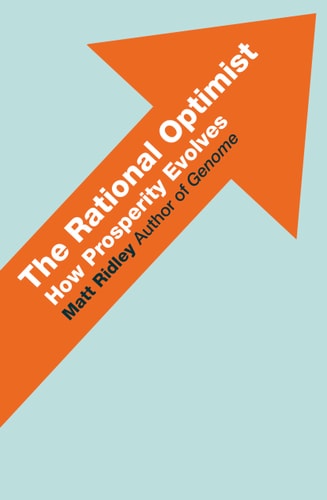
The Rational Optimist: How Prosperity Evolves
0
0
As an Amazon Associate and affiliate partner, Menrva Books earns from qualifying purchases. Learn more
Author Description
Matt Ridley, acclaimed author of the classics Genome and Nature via Nurture, turns from investigating human nature to investigating human progress. In The Rational Optimist Ridley offers a counterblast to the prevailing pessimism of our age, and proves, however much we like to think to the contrary, that things are getting better. Over 10,000 years ago there were fewer than 10 million people on the planet. Today there are more than 6 billion, 99 per cent of whom are better fed, better sheltered, better entertained and better protected against disease than their Stone Age ancestors. The availability of almost everything a person could want or need has been going erratically upwards for 10,000 years and has rapidly accelerated over the last 200 years: calories; vitamins; clean water; machines; privacy; the means to travel faster than we can run, and the ability to communicate over longer distances than we can shout. Yet, bizarrely, however much things improve from the way they were before, people still cling to the belief that the future will be nothing but disastrous. In this original, optimistic book, Matt Ridley puts forward his surprisingly simple answer to how humans progress, arguing that we progress when we trade and we only really trade productively when we trust each other. The Rational Optimist will do for economics what Genome did for genomics and will show that the answer to our problems, imagined or real, is to keep on doing what we've been doing for 10,000 years to keep on changing.
Menrva's Summary
THE THESIS
How does the mechanism of human exchange drive the long-term trajectory of global prosperity? Matt Ridley, a biologist and science writer with a doctorate from Oxford, synthesizes historical data and economic theory to argue that human progress is an emergent property of specialization and trade. He posits that the expansion of exchange networks—facilitated by trust—has consistently elevated living standards over the last 10,000 years, challenging the prevailing cultural narrative of inevitable decline.
THE SCOPE MAP
What You Will Find
- A historical analysis of global living standards spanning from the Stone Age to the modern era.
- The theory of 'collective intelligence' as a driver for technological and social advancement.
- Empirical evidence regarding caloric intake, health outcomes, and resource availability over time.
- An examination of the psychological and cultural roots of modern pessimism.
THE AUTHORITY PERSPECTIVE
This work presents a provocative, broad-scale argument that prioritizes market-based optimism over contemporary environmental and social concerns. The text functions as a high-level synthesis of evolutionary biology and classical economic theory, intended for readers interested in macro-historical trends and the philosophy of progress.
Page Count:
448
Publication Date:
2010-05-20
Publisher:
HarperCollins Publishers
ISBN-10:
0007412525
ISBN-13:
9780007412525
Non-Fiction
Science
Economics
History
Macroeconomics
Economics
Economic History
Sociology
Reason
Wealth
Optimism
Social change
Educational Resources
World
Progress
Community Tags
Similar Books