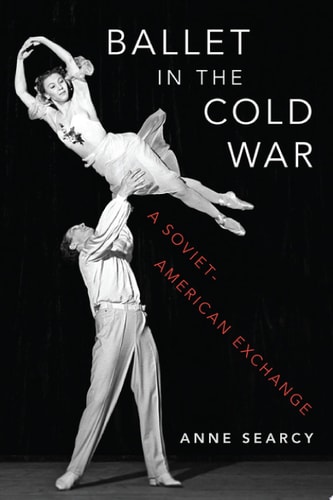
Ballet in the Cold War: A Soviet-American Exchange
0
0
As an Amazon Associate and affiliate partner, Menrva Books earns from qualifying purchases. Learn more
Author Description
In 1959, the Bolshoi Ballet arrived in New York for its first ever performances in the United States. The tour was part of the Soviet-American cultural exchange, arranged by the governments of the US and USSR as part of their Cold War strategies. This book explores the first tours of the exchange, by the Bolshoi in 1959 and 1962, by American Ballet Theatre in 1960, and by New York City Ballet in 1962. The tours opened up space for genuine appreciation of foreign ballet. American fans lined up overnight to buy tickets to the Bolshoi, and Soviet audiences packed massive theaters to see American companies. Political leaders, including Khrushchev and Kennedy, met with the dancers. The audience reaction, screaming and crying, was overwhelming.But the tours also began a series of deep misunderstandings. American and Soviet audiences did not view ballet in the same way. Each group experienced the other's ballet through the lens of their own aesthetics. Americans loved Soviet dancers but believed that Soviet ballets were old-fashioned and vulgar. Soviet audiences and critics likewise appreciated American technique and innovation but saw American choreography as empty and dry.Drawing on both Russian- and English-language archival sources, this book demonstrates that the separation between Soviet and American ballet lies less in how the ballets look and sound, and more in the ways that Soviet and American viewers were trained to see and hear. It suggests new ways to understand both Cold War cultural diplomacy and twentieth-century ballet.
Menrva's Summary
THE THESIS
This book investigates how the cultural exchange of ballet companies between the United States and the Soviet Union during the Cold War functioned as a tool of diplomacy while simultaneously revealing deep-seated aesthetic misunderstandings. Anne Searcy, a scholar of music and dance history, utilizes a rigorous framework that integrates political strategy with artistic reception. By examining the specific tours of the Bolshoi Ballet, American Ballet Theatre, and New York City Ballet, she argues that the friction between these nations was rooted in divergent training and cultural expectations rather than mere technical differences.
THE SCOPE MAP
What You Will Find
- Analysis of the 1959 and 1962 Bolshoi Ballet tours in the United States.
- Examination of the 1960 American Ballet Theatre and 1962 New York City Ballet tours in the Soviet Union.
- Comparative study of Soviet and American aesthetic values and audience reception.
- Integration of primary source materials from both Russian and English-language archives.
Scope Limits
- The study focuses primarily on the early years of the exchange program rather than the entire duration of the Cold War.
- The analysis is limited to the specific companies mentioned and does not cover every minor cultural exchange of the era.
THE AUTHORITY PERSPECTIVE
Experts recognize this work as a significant contribution to the study of Cold War cultural diplomacy and the history of twentieth-century dance. Readers frequently note the meticulous use of archival research to bridge the gap between political history and artistic criticism.
Page Count:
198
Publication Date:
2020-01-01
Publisher:
Oxford University Press
ISBN-10:
0190945125
ISBN-13:
9780190945121
History
American History
Cold War
Dance
Soviet History
Humanities
Community Tags
Similar Books