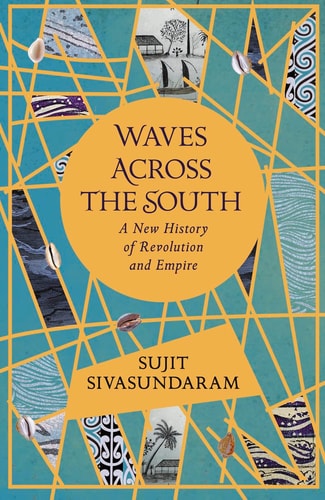
Waves Across the South: A New History of Britain and Empire
0
0
As an Amazon Associate and affiliate partner, Menrva Books earns from qualifying purchases. Learn more
Author Description
A sweeping history and major reassessment of how Britain came to rule the waves – told from the forgotten quarter of the world.It is difficult now to imagine a time when Britain stood as the world’s supreme power, much less to imagine how that came to be. It was certainly not the product of calculated planning or superlative naval power, as often as that story is told. Turning this story inside out, Cambridge historian Sujit Sivasundaram places what he terms ‘the forgotten quarter’ – the peoples and places of the Pacific and Indian Oceans to give a bold reinterpretation of how the British Empire was formed – and how it couldn’t have happened without a backdrop of global turmoil.The decades from 1780 to 1830 were tumultuous, including for the British. America had recently made its break for independence, and following the French, a wave of revolution was coursing south across the globe. In countries around the Pacific and Indian oceans, the seeds of rebellion grew fast, becoming local and then national revolution. From Oman to Tonga, Mauritius to Sri Lanka, The Forgotten Quarter gives voice to the many countries which were following and fighting over their own visions of modernity. Venerable Eurasian empires – Ottoman, Mughal and Qing – were transformed at their maritime frontiers. New political forces, including monarchies, inaugurated in the Pacific. The Forgotten Quarter gives those communities centre stage to tell the story of the British Empire from their neglected perspectives, and to show how in many places this moment of opportunity was seized to contemplate selves and futures in radically new ways.Bringing unparalleled expertise and global thinking to bear, Sujit Sivasundaram delivers a ground-breaking account of a world in flux that will transform how we think of Britain’s colonial rule. Naval war, strategy and imperial trade had their parts to play, but so did hope, false promise, rebellion, and the pursuit of modernity.
Menrva's Summary
THE THESIS
How did the British Empire consolidate its global power during a period of widespread revolutionary upheaval, and what role did the indigenous societies of the Indian and Pacific Oceans play in this transformation? Cambridge historian Sujit Sivasundaram challenges traditional narratives that attribute British supremacy solely to naval might or strategic planning. By centering the 'forgotten quarter'—the diverse peoples and regions of the Indian and Pacific Oceans—he argues that the formation of the British Empire was inextricably linked to local responses to global turmoil and the pursuit of modernity between 1780 and 1830. The work utilizes a wide array of maritime and regional perspectives to demonstrate that colonial rule was a reactive, complex process shaped as much by indigenous rebellion and political innovation as by imperial ambition.
THE SCOPE MAP
What You Will Find
- A detailed examination of the geopolitical shifts in the Indian and Pacific Oceans from 1780 to 1830.
- Analysis of the decline and transformation of the Ottoman, Mughal, and Qing empires at their maritime frontiers.
- Case studies of local resistance and political development in regions including Oman, Tonga, Mauritius, and Sri Lanka.
- An investigation into the intersection of imperial trade, naval strategy, and the indigenous pursuit of new political futures.
THE AUTHORITY PERSPECTIVE
This work is regarded as a significant contribution to imperial history, praised for its shift in focus from the metropole to the maritime periphery. The text offers a dense, scholarly re-evaluation of colonial expansion that demands a sophisticated understanding of global political dynamics during the late eighteenth and early nineteenth centuries.
Page Count:
480
Publication Date:
2020-09-03
Publisher:
William Collins
ISBN-10:
0007575548
ISBN-13:
9780007575541
History
British Empire
Maritime history
Colonialism
World history
Pacific History
Subjects
Community Tags
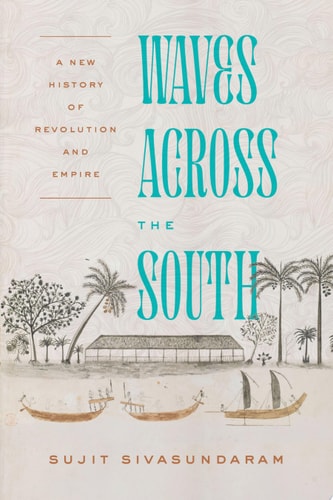
Other Editions(2)
Similar Books


Reader Comments
Share Your Thoughts
No comments yet. Be the first to share your thoughts!