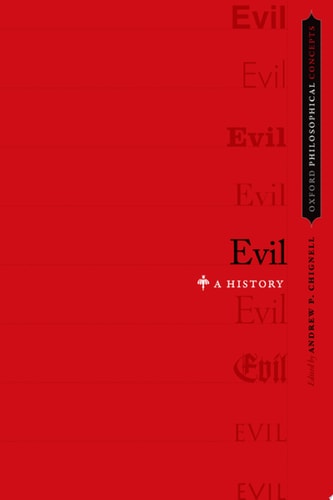
Evil: A History
0
0
As an Amazon Associate and affiliate partner, Menrva Books earns from qualifying purchases. Learn more
Author Description
The code of conduct for a leading tech company famously says "Don't Be Evil." But what exactly is evil? Is it just badness by another name--the shadow side of good? Or is it something more substantive--a malevolent force or power at work in the universe? These are some of the ontological questions that philosophers have grappled with for centuries. But evil also raises perplexing epistemic and psychological questions. Can we really know evil? Does a victim know evil differently than a perpetrator or witness? What motivates evil-doers? Satan's rebellion, Iago's machinations, and Stalin's genocides may be hard to understand in terms of ordinary reasons, intentions, beliefs, and desires. But what about the more "banal" evils performed by technocrats in a collective: how do we make sense of Adolf Eichmann's self-conception as just an effective bureaucrat deserving of a promotion?Evil: A History collects thirteen essays that tell the story of evil in western thought, starting with its origins in ancient Hebrew wisdom literature and classical Greek drama all the way to Darwinism and Holocaust theory. Thirteen interspersed reflections contextualize philosophical developments by looking at evil through the eyes of animals, poets, mystics, witches, librettists, film directors, and even a tech product manager.Evil: A History will enlighten readers about one of the most alluring and difficult topics in philosophy and intellectual life, and will challenge their assumptions about the very nature of evil.
Menrva's Summary
THE THESIS
This volume investigates the evolution of the concept of evil within Western intellectual history, questioning whether it represents a distinct ontological force or merely an extreme manifestation of human badness. Editor Andrew P. Chignell compiles thirteen scholarly essays that trace the development of this concept from ancient Hebrew and Greek foundations through modern psychological and political frameworks. By integrating historical analysis with contemporary reflections, the text provides a structured inquiry into how philosophers, theologians, and cultural observers have defined and categorized malevolence across centuries.
THE SCOPE MAP
What You Will Find
- Historical analysis of evil in Western thought from antiquity to the modern era.
- Philosophical examinations of the motivations behind both extreme and bureaucratic evil.
- Interdisciplinary reflections from perspectives including literature, film, and technology.
Scope Limits
- The text does not provide a singular, definitive moral definition of evil.
- It focuses primarily on Western intellectual traditions rather than global or non-Western philosophical perspectives.
THE AUTHORITY PERSPECTIVE
Experts and academics recognize this collection as a rigorous, multi-faceted resource for those studying the history of ethics and moral philosophy. Readers frequently note the intellectual density of the essays, which successfully bridge the gap between abstract metaphysical inquiry and concrete historical application.
Page Count:
523
Publication Date:
2019-01-01
Publisher:
Oxford University Press
ISBN-10:
0190944226
ISBN-13:
9780190944223
Philosophy
Non-Fiction
Ethics
History & Surveys
Metaphysics
Good & Evil
Intellectual History
History of Ideas
Community Tags
Similar Books