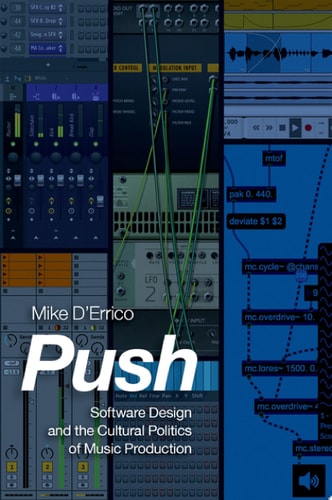
Push: Software Design and the Cultural Politics of Music Production
0
0
As an Amazon Associate and affiliate partner, Menrva Books earns from qualifying purchases. Learn more
Author Description
Push: Software Design And The Cultural Politics Of Music Production Shows How Changes In The Design Of Music Software In The First Decades Of The Twenty-first Century Shaped The Production Techniques And Performance Practices Of Artists Working Across Media, From Hip-hop And Electronic Dance Music To Video Games And Mobile Apps. Emerging Alongside Developments In Digital Music Distribution Such As Peer-to-peer File Sharing And The Mp3 Format, Digital Audio Workstations Like Fl Studio And Ableton Live Introduced Design Affordances That Encouraged Rapid Music Creation Workflows Through Flashy, User-friendly Interfaces. Meanwhile, Software Such As Avid's Pro Tools Attempted To Protect Its Status As The Industry Standard, Professional Daw Of Choice By Incorporating Design Elements From Pre-digital Music Technologies. Other Software, Like Cycling 74's Max, Asserted Its Alterity To Commercial Daws By Presenting Users With Nothing But A Blank Screen. These Are More Than Just Aesthetic Design Choices. Push Examines The Social, Cultural, And Political Values Designed Into Music Software, And How Those Values Become Embodied By Musical Communities Through Production And Performance. It Reveals Ties Between The Maximalist Design Of Fl Studio, Skeuomorphic Design In Pro Tools, And Gender Inequity In The Music Products Industry. It Connects The Computational Thinking Required By Max, As Well As Izotope's Innovations In Artificial Intelligence, With The Cultural Politics Of Silicon Valley's Design Thinking. Finally, It Thinks Through What Happens When Software Becomes Hardware, And Users Externalize Their Screens Through The Use Of Midi Controllers, Mobile Media, And Video Game Controllers. Amidst The Perpetual Upgrade Culture Of Music Technology, Push Provides A Model For Understanding Software As A Microcosm For The Increasing Convergence Of Globalization, Neoliberal Capitalism, And Techno-utopianism That Has Come To Define Our Digital Lives--
Menrva's Summary
THE THESIS
This book investigates how the design of music software in the early twenty-first century functions as a mechanism for shaping cultural politics, production techniques, and performance practices. Mike D'Errico, a scholar of music and technology, utilizes a framework of software studies to analyze how the interface design of digital audio workstations (DAWs) reflects broader societal values. By examining the development of platforms like FL Studio, Ableton Live, Pro Tools, and Max, the author argues that software design is never neutral but instead embodies specific political and economic ideologies.
THE SCOPE MAP
What You Will Find
- Analysis of interface design philosophies including skeuomorphism and maximalism.
- Examination of the relationship between software affordances and user workflows.
- Case studies on the cultural politics of Silicon Valley design thinking.
- Discussion of the intersection between music production and gender inequity.
Scope Limits
- The text focuses primarily on the first two decades of the twenty-first century.
- It does not provide a technical manual for operating the specific software mentioned.
THE AUTHORITY PERSPECTIVE
Experts in musicology and media studies identify this work as a significant contribution to the understanding of how digital tools influence creative labor. Readers frequently note the academic density of the prose, which effectively bridges the gap between technical software analysis and cultural critique.
Page Count:
0
Publication Date:
2022-01-01
ISBN-10:
0190943327
ISBN-13:
9780190943325
Media Studies
Sociology of Technology
Music Production
Music Technology
Community Tags
Other Editions(2)
Similar Books












Reader Comments
Share Your Thoughts
No comments yet. Be the first to share your thoughts!