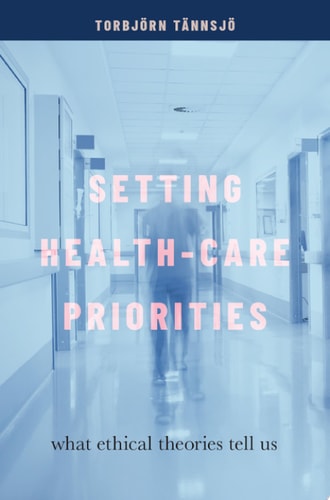
Setting Health-care Priorities
0
0
As an Amazon Associate and affiliate partner, Menrva Books earns from qualifying purchases. Learn more
Author Description
With Much Of The World's Population Facing Restricted Access To Adequate Medical Care, How To Allocate Scarce Health-care Resources Is A Pressing Question For Governments, Hospitals, And Individuals. How Do We Decide Where Funding For Health-care Programs Should Go? Tannsjo Here Approaches The Subject From A Philosophical Perspective, Balancing Theoretical Treatments Of Distributive Ethics With Real-world Examples Of How Health-care Is Administered Around The World Today. Tannsjo Begins By Laying Out Several Popular Ethical Theories-utilitarianism, Which Recommends Maximizing The Best Overall Outcome; Egalitarianism, Which Recommends Smoothing Out The Differences Between People As Much As Possible; And The Maximin/leximin Theory, Which Urges People To Give Absolute Priority To Those Who Are Worst Off. Tannsjo Shows How, In Abstract Thought Experiments, These Theories Come Into Conflict With Each Other And Reveal Puzzling Implications. He Goes On To Argue, However, That When We Consider Health-care In The Real-world, These Theories All Agree On A Central Point: In A Well-ordered Welfare State, More Resources Should Be Directed To The Care And Cure Of People Suffering From Mental Illness, And Less To The Marginal Life Extension Of Elderly Patients. Tannsjo's Book Thus Recommends A Shift In Spending To Increase Fairness And Overall Utility-while Also Recognizing That This Kind Of Dispassionate Suggestion, With Its Purely Economic Foundation, Is Unlikely To Take Hold In Policy. Tannsjo's Analysis Is A Case Study In How Ethical Theories Can Sometimes Lead To Rational Conclusions And Recommendations That We Are Not Prepared To Accept.
Menrva's Summary
THE THESIS
How should society allocate scarce health-care resources when faced with competing ethical demands and limited funding? Torbjorn Tannsjo, a philosopher, examines the intersection of distributive ethics and practical health-care administration. He evaluates major ethical frameworks—utilitarianism, egalitarianism, and maximin/leximin theory—to determine how they inform policy decisions in modern welfare states.
THE SCOPE MAP
What You Will Find
- Comparative analysis of utilitarian, egalitarian, and maximin/leximin ethical theories
- Theoretical thought experiments regarding resource distribution
- Real-world case studies of health-care administration
Scope Limits
- Does not provide a comprehensive guide to clinical medical practice
- Does not account for the political feasibility of implementing the proposed shifts in funding
THE AUTHORITY PERSPECTIVE
Readers frequently note the academic density of the prose and the author's rigorous application of philosophical logic to public policy. Experts highlight this as a foundational text for those interested in the ethical tensions inherent in health-care resource allocation.
Page Count:
288
Publication Date:
2019-01-01
Publisher:
Oxford University Press
ISBN-10:
019094689X
ISBN-13:
9780190946890
Philosophy
Health Economics
Public Policy
Medical Ethics
Distributive Justice
Community Tags
Similar Books