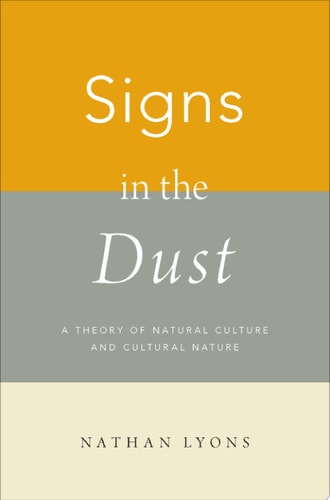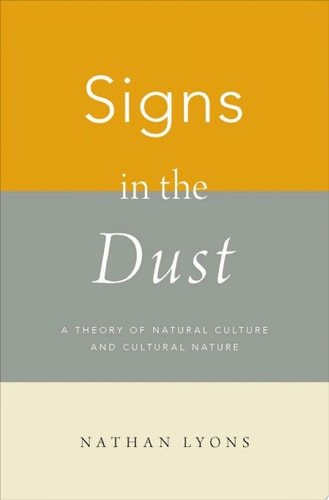
Signs in the Dust: A Theory of Natural Culture and Cultural Nature
0
0
As an Amazon Associate and affiliate partner, Menrva Books earns from qualifying purchases. Learn more
Author Description
Modern thought is characterized by a dichotomy of meaningful culture and unmeaning nature. Signs in the Dust uses medieval semiotics to develop a new theory of nature and culture that resists this familiar picture of things. Through readings of Thomas Aquinas, Nicholas of Cusa, and John Poinsot (John of St. Thomas), it offers a semiotic analysis of human culture in both its anthropological breadth as an enterprise of creaturely sign-making, and its theological height as a finite participation in the Trinity, which can be understood as an absolute 'cultural nature'. Signs in the Dust then extends this account of human culture backwards into the natural depth of biological and physical nature. It puts the biosemiotics of its medieval sources, along with Félix Ravaisson's philosophy of habit, into dialogue with the Extended Evolutionary Synthesis that is emerging in contemporary biology, to show how all living things participate in semiosis, so that that a cultural dimension is present through the whole order of nature and the whole of natural history. It also retrieves Aquinas' doctrine of intentions in the medium to show how signification can be attributed in a diminished way to even inanimate nature, with the ontological implication that being as such should be reconceived in semiotic terms. The phenomena of human culture are therefore to be understood not as breaks with a meaningless nature, but instead as heightenings and deepenings of natural movements of meaning that long precede and far exceed us. Against the modern divorce of nature and culture, Signs in the Dust argues that culture is natural and nature is cultural, through and through.
Menrva's Summary
THE THESIS
Can the modern dichotomy between meaningful culture and meaningless nature be reconciled through a semiotic framework? Nathan Lyons, a scholar of philosophy and theology, investigates this question by synthesizing medieval semiotic traditions with contemporary biological theories. He argues that human culture is not a departure from nature, but rather a continuation and intensification of semiotic processes that permeate the entire natural order. By re-examining the works of Thomas Aquinas, Nicholas of Cusa, and John Poinsot, Lyons constructs a theory where being itself is understood in semiotic terms.
THE SCOPE MAP
What You Will Find
- A re-evaluation of medieval semiotic doctrines regarding sign-making and intention.
- An integration of Félix Ravaisson’s philosophy of habit with the Extended Evolutionary Synthesis in biology.
- An ontological argument for the presence of semiosis in both animate and inanimate natural systems.
Scope Limits
- The text does not provide a comprehensive history of modern philosophy, focusing instead on specific medieval and contemporary intersections.
- It does not offer empirical biological data, but rather a philosophical interpretation of existing evolutionary frameworks.
THE AUTHORITY PERSPECTIVE
Scholars in the fields of semiotics and theology recognize this work as a dense, rigorous attempt to bridge the gap between scholastic metaphysics and modern biological theory. Readers frequently note the academic complexity of the prose, which requires a strong background in philosophical terminology to fully grasp the author's arguments.
Page Count:
272
Publication Date:
2019-01-01
Publisher:
Oxford University Press
ISBN-10:
0190941286
ISBN-13:
9780190941284
Philosophy
Religion
Semiotics
Religious Aspects
Theology
Evolution
Metaphysics
Christianity And Culture
Biosemiotics
Community Tags
Other Editions(2)
Similar Books