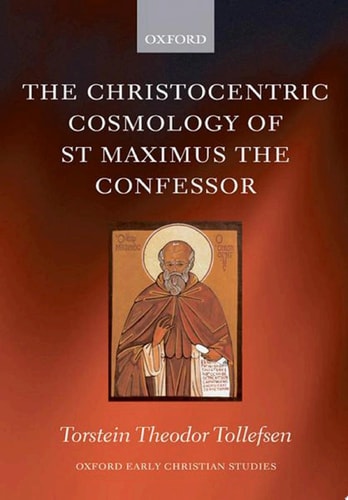
The Christocentric Cosmology of St Maximus the Confessor
0
0
As an Amazon Associate and affiliate partner, Menrva Books earns from qualifying purchases. Learn more
Author Description
St. Maximus the Confessor (580-662), was a major Byzantine thinker, a theologian and philosopher. He developed a philosophical theology in which the doctrine of God, creation, the cosmic order, and salvation is integrated in a unified conception of reality. Christ, the divine Logos, is the centre of the principles (the logoi ) according to which the cosmos is created, and in accordance with which it shall convert to its divine source. Torstein Tollefsen treats Maximus' thought from a philosophical point of view, and discusses similar thought patterns in pagan Neoplatonism. The study focuses on Maximus' doctrine of creation, in which he denies the possibility of eternal coexistence of uncreated divinity and created and limited being. Tollefsen shows that by the logoi God institutes an ordered cosmos in which separate entities of different species are ontologically interrelated, with man as the centre of the created world. The book also investigates Maximus' teaching of God's activities or energies, and shows how participation in these energies is conceived according to the divine principles of the logoi. An extensive discussion of the complex topic of participation is provided.
Menrva's Summary
THE THESIS
This work investigates how St. Maximus the Confessor constructs a unified philosophical theology that integrates the doctrine of God, creation, and cosmic order through the central role of the divine Logos. Torstein Theodor Tollefsen, a scholar of Byzantine thought, examines the metaphysical framework of Maximus by comparing his concepts with pagan Neoplatonism. The author argues that Maximus establishes a cosmos where created entities are ontologically interrelated through the logoi, with humanity serving as the focal point of this divine order. By analyzing the doctrine of creation and the participation in divine energies, Tollefsen provides a rigorous philosophical defense of Maximus's integrated view of reality.
THE SCOPE MAP
What You Will Find
- Analysis of the doctrine of the logoi as the principles of cosmic creation.
- Comparative study between Maximian thought and pagan Neoplatonism.
- Investigation into the theology of divine energies and human participation.
- Examination of the ontological relationship between uncreated divinity and created beings.
Scope Limits
- The text does not provide a general biography of St. Maximus the Confessor.
- It does not cover the historical political context of the Byzantine Empire during the 7th century.
THE AUTHORITY PERSPECTIVE
Experts recognize this text as a rigorous academic contribution to the study of Byzantine philosophy and patristic theology. Readers frequently note the high density of the prose and the specialized philosophical terminology required to engage with the author's arguments.
Page Count:
268
Publication Date:
2008-01-01
Publisher:
OUP Oxford
ISBN-10:
0191608068
ISBN-13:
9780191608063
Philosophy
Religion
Metaphysics
Byzantine History
Neoplatonism
Patristics
Theology
Community Tags
Similar Books