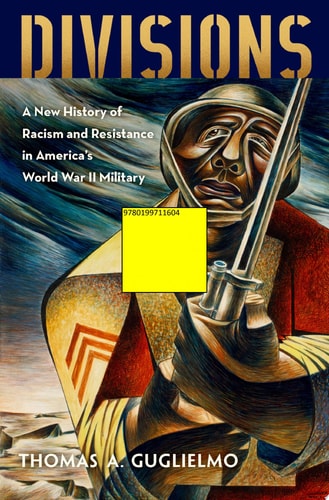
Divisions: A New History of Racism and Resistance in America's World War II Military
0
0
As an Amazon Associate and affiliate partner, Menrva Books earns from qualifying purchases. Learn more
Author Description
Divisions Examines Racism And Resistance In America's World War Ii Military. The Military Built Not One Color Line, But A Complex Tangle Of Them, Involving Every Imaginable Aspect Of Military Life. Who Served? Who Fought? Who Died? Who Gave Orders And Who Was Forced To Follow Them? Who Received The Best Ratings And Jobs And Pay And Promotions? Who Was Court-martialed? Who Received Furloughs And Leaves? Who Received Honorable Or Dishonorable Discharges? Who Ate At The Officers' Club? Who Danced At The Post's Main Recreation Center? Who Drank At The Best Pub In Cherbourg, France Or Swam At The Nicest Pool In Calcutta? Color Lines, Which Divided American Troops In Various Configurations, Often Spoke Definitively In All These Matters And More. Taken Together, They Represented A Sprawling Structure Of White Supremacy And Of African American, Japanese American, And Other Nonwhites' Subordination. Varied Freedom Struggles Arose In Response, Democratizing Portions Of The Wartime Military And Setting The Postwar Stage For Its Desegregation And For The Flowering Of Civil Rights Movements Beyond. But The Costs Of The Military's Color Lines Were Devastating. They Impeded America's War Effort; Undermined The Nation's Four-freedoms Rhetoric; Traumatized, Even Killed, An Unknowable Number Of Nonwhite Troops; Further Naturalized The Very Concept Of Race; Deepened Many Whites' Investments In White Supremacy, Especially Anti-black Racism; And Further Fractured The American People-- Provided By Publisher.
Menrva's Summary
THE THESIS
This book investigates how the United States military constructed and maintained a complex, multi-layered system of racial segregation and white supremacy during World War II. Thomas A. Guglielmo, a historian specializing in race and ethnicity, utilizes extensive archival research and military records to demonstrate how these color lines dictated every aspect of service, from job assignments and promotions to social privileges. The work argues that while these structures severely undermined the nation's democratic rhetoric and war effort, they also catalyzed significant resistance and freedom struggles among nonwhite troops that laid the groundwork for the postwar civil rights movement.
THE SCOPE MAP
What You Will Find
- Analysis of institutionalized racial hierarchies within the U.S. Army, Navy, and Air Force.
- Examination of the lived experiences of African American and Japanese American service members.
- Documentation of resistance strategies used to challenge military segregation.
- Assessment of the long-term social and political consequences of wartime racial policies.
Scope Limits
- The study focuses primarily on the American military experience rather than international combat tactics.
- It does not provide a comprehensive biography of individual military leaders.
THE AUTHORITY PERSPECTIVE
Scholars and historians frequently cite this work as a definitive analysis of the intersection between military bureaucracy and racial ideology. Readers often note the rigorous use of primary source documentation to illustrate the pervasive nature of institutional discrimination.
Page Count:
0
Publication Date:
2021-01-01
Publisher:
New York, NY : Oxford University Press,
ISBN-10:
0190940352
ISBN-13:
9780190940355
History
World War
American History
Hispanic Americans
Discrimination In The Military
Hispanic American
Military History
Social Science
Race Relations
Social Aspects
African American
Indian
Asian American
Community Tags
Other Editions(3)
Similar Books



Reader Comments
Share Your Thoughts
No comments yet. Be the first to share your thoughts!