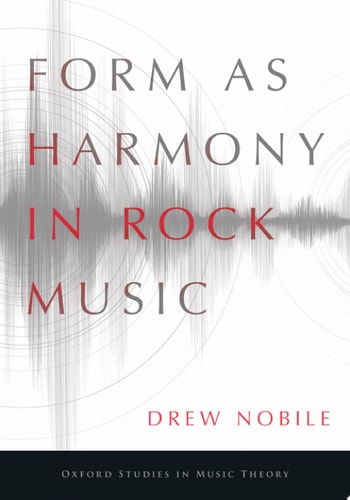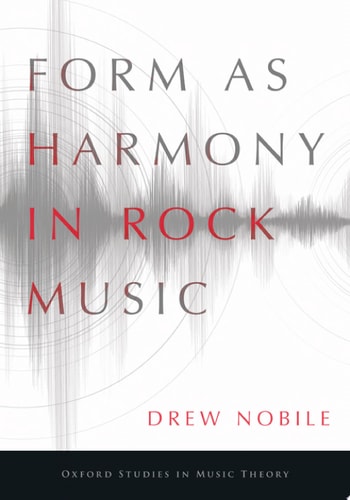
Form As Harmony In Rock Music
0
0
As an Amazon Associate and affiliate partner, Menrva Books earns from qualifying purchases. Learn more
Author Description
Overturning The Inherited Belief That Popular Music Is Unrefined, Form As Harmony In Rock Music Brings The Process-based Approach Of Classical Theorists To Popular Music Scholarship. Author Drew Nobile Offers The First Comprehensive Theory Of Form For 1960s, 70s, And 80s Classic Rock Repertoire, Showing How Songs In This Genre Are Not Simply A Series Of Discrete Elements, But Rather Exhibit Cohesive Formal-harmonic Structures Across Their Entire Timespan. Though Many Elements Contribute To The Cohesion Of A Song, The Rock Music Of These Decades Is Built Around A Fundamentally Harmonic Backdrop, Giving Rise To Distinct Types Of Verses, Choruses, And Bridges. Nobile's Rigorous But Readable Theoretical Analysis Demonstrates How Artists From Bob Dylan To Stevie Wonder To Madonna Consistently Turn To The Same Compositional Structures Throughout Rock's Various Genres And Decades, Unifying Them Under A Single Musical Style. Using Over 200 Transcriptions, Graphs, And Form Charts, Form As Harmony In Rock Music Advocates A Structural Approach To Rock Analysis, Revealing Essential Features Of This Style That Would Otherwise Remain Below Our Conscious Awareness.
Menrva's Summary
THE THESIS
This book investigates whether the popular music of the 1960s, 70s, and 80s possesses a cohesive formal-harmonic structure comparable to classical music traditions. Drew Nobile, a scholar in music theory, applies rigorous analytical methodologies typically reserved for classical compositions to the classic rock repertoire. By examining the interplay between harmonic backdrops and song sections, the author argues that rock music relies on consistent, underlying compositional structures that unify diverse artists and subgenres.
THE SCOPE MAP
What You Will Find
- Comprehensive theory of form for classic rock music from the 1960s through the 1980s
- Analysis of harmonic structures in verses, choruses, and bridges
- Over 200 transcriptions, graphs, and form charts
Scope Limits
- The analysis is primarily focused on the harmonic and formal aspects of the music rather than lyrical or cultural context
- The study is restricted to the classic rock era and does not extend to contemporary or post-1980s popular music trends
THE AUTHORITY PERSPECTIVE
Experts recognize this work as a significant contribution to popular music scholarship for its systematic application of classical theoretical frameworks to rock repertoire. Readers frequently note the technical density of the prose, which is best suited for those with a background in music theory or formal musical analysis.
Page Count:
272
Publication Date:
2020-01-01
Publisher:
Oxford University Press
ISBN-10:
019094837X
ISBN-13:
9780190948375
Non-Fiction
Academic
Musicology
Music theory
Rock music