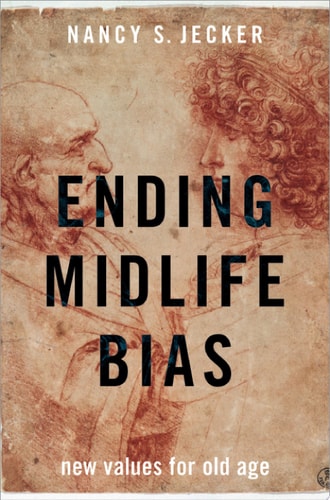
Ending Midlife Bias: New Values for Old Age
0
0
As an Amazon Associate and affiliate partner, Menrva Books earns from qualifying purchases. Learn more
Author Description
We live at a time when the human lifespan has increased like never before. As average lifespans stretch to new lengths, what impact should this have on our values? Should our values change over the course of our ever-increasing lifespans? Nancy S. Jecker coins the term, the life stage relativity of values, to capture the idea that at different stages of our lives, different ethical concerns shift to the foreground. During early life, infants and small children hold dear the value of being cared for and nurtured by someone they trust--and their vulnerability and dependency make these the right values for them. By early adulthood and continuing into midlife, the capacity for greater physical and emotional independence gives people reason to place more emphasis on autonomy and the ability to freely choose and carry out their plan of life. During old age, heightened risk for chronic disease and disability gives us a reason to shift our focus again, emphasizing safeguarding our central capabilities and keeping our dignity and self-respect intact.Despite different values becoming central at different stages of life, we often assume the standpoint of someone in midlife, who is in the midst of planning a future adulthood that stretches out before them. Jecker coins the term, midlife bias, to refer to the privileging of midlife. Midlife bias occurs when we assume that autonomy should be our central aim at all life stages and give it priority in a wide range of ethical decisions. The privileging of midlife raises fundamental problems of fairness. It also suggests the possibility of large gaps in the ethical principles and theories at hand. Ending Midlife Bias: New Values for Old Age addresses these concerns in a step-wise fashion, focusing on later life. Jecker first introduces a philosophical framework that extends moral theorizing to older adults, addressing midlife bias, the life stage relativity of values, human capabilities and dignity, time's passage, the narrative self
Menrva's Summary
THE THESIS
How can society restructure its ethical frameworks to accommodate the shifting values of an aging population rather than privileging the midlife perspective? Nancy S. Jecker, a professor of bioethics and humanities, utilizes philosophical inquiry and life-course analysis to challenge the pervasive assumption that autonomy remains the primary moral imperative throughout all stages of existence. She argues that as human lifespans extend, ethical theories must evolve to recognize the distinct needs and capabilities of older adults, moving beyond the midlife-centric focus on future planning and independence.
THE SCOPE MAP
What You Will Find
- A philosophical framework for life stage relativity of values
- Analysis of human capabilities and dignity in later life
- Examination of the narrative self and the passage of time
- Critique of current bioethical theories regarding aging
Scope Limits
- Does not provide clinical medical advice for geriatric care
- Does not focus on economic policy or pension reform
THE AUTHORITY PERSPECTIVE
Experts in bioethics recognize this work as a significant contribution to the philosophy of aging, noting its clear articulation of systemic biases in moral theory. Readers frequently highlight the accessibility of the prose despite the complex philosophical concepts presented throughout the text.
Page Count:
360
Publication Date:
2020-01-01
Publisher:
Oxford University Press
ISBN-10:
0190949090
ISBN-13:
9780190949099
Philosophy
Aging
Old Age
Medical
Social Science
Values
Ethics
Gerontology
Allied Health
Community Tags
Other Editions(2)
Similar Books








Reader Comments
Share Your Thoughts
No comments yet. Be the first to share your thoughts!