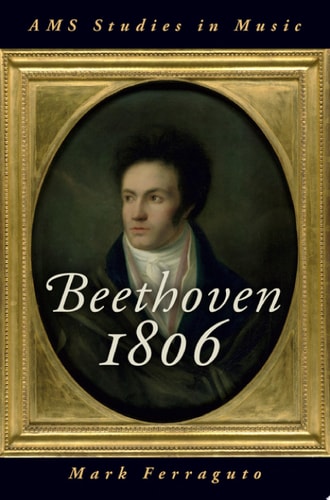
Beethoven 1806
0
0
As an Amazon Associate and affiliate partner, Menrva Books earns from qualifying purchases. Learn more
Author Description
Between Early 1806 And Early 1807, Ludwig Van Beethoven Completed A Remarkable Series Of Instrumental Works. But Critics Have Struggled To Reconcile The Music Of This Banner Year With Beethoven's Heroic Style, The Paradigm Through Which His Middle-period Works Have Typically Been Understood. Drawing On Theories Of Mediation And A Wealth Of Primary Sources, Beethoven 1806 Explores The Specific Contexts In Which The Music Of This Year Was Conceived, Composed, And Heard. As Author Mark Ferraguto Argues, Understanding This Music Depends On Appreciating The Relationships That It Both Creates And Reflects. Not Only Did Beethoven Depend On Patrons, Performers, Publishers, Critics, And Audiences To Earn A Living, But He Also Tailored His Compositions To Suit Particular Sensibilities, Proclivities, And Technologies.
Menrva's Summary
THE THESIS
This book investigates how the specific socio-cultural and technological contexts of 1806 influenced the composition and reception of Ludwig van Beethoven's instrumental works. Mark Ferraguto, a musicologist, utilizes primary source documentation and theories of mediation to challenge the traditional 'heroic' interpretation of Beethoven's middle-period music. He argues that these compositions were not merely products of individual genius but were shaped by the composer's interactions with patrons, performers, and the evolving musical technologies of the era.
THE SCOPE MAP
What You Will Find
- Analysis of instrumental works composed between early 1806 and early 1807
- Examination of the mediation between composer, patron, and audience
- Integration of historical primary source materials
- Contextual study of 19th-century musical production and consumption
Scope Limits
- Does not provide a comprehensive biography of Beethoven's entire life
- Does not focus on vocal or operatic works from this period
THE AUTHORITY PERSPECTIVE
Scholars and musicologists recognize this work as a significant contribution to the study of Beethoven's middle period, noting its departure from traditional biographical tropes. Readers frequently highlight the academic rigor and the detailed archival research that supports Ferraguto's contextual arguments.
Page Count:
256
Publication Date:
2019-01-01
Publisher:
Oxford University Press
ISBN-10:
0190947195
ISBN-13:
9780190947194
Biography
19th Century
Music History
Musicology
Community Tags
Similar Books