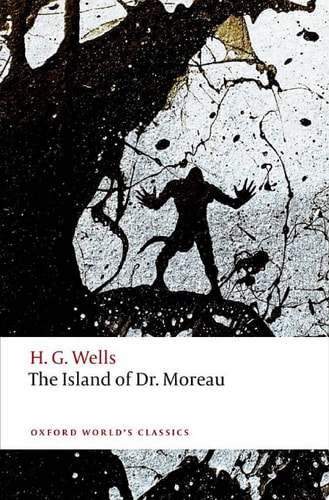
The Island of Doctor Moreau
0
0
As an Amazon Associate and affiliate partner, Menrva Books earns from qualifying purchases. Learn more
Author Description
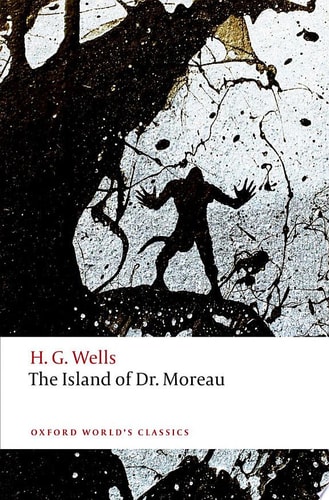
'The creatures I had seen were not men, had never been men. They were animals, humanised animals...' A shipwrecked Edward Prendick finds himself stranded on a remote Noble island, the guest of a notorious scientist, Doctor Moreau. Disturbed by the cries of animals in pain, and by his encounters with half-bestial creatures, Edward slowly realises his danger and the extremes of the Doctor's experiments. Saturated in pain and disgust, suffused with grotesque and often unbearable images of torture and bodily mutilation, The Island of Doctor Moreau is unquestionably a shocking novel. It is also a serious, and highly knowledgeable, philosophical engagement with Wells's times, with their climate of scientific openness and advancement, but also their anxieties about the ethical nature of scientific discoveries, and their implications for religion. Darryl Jones's introduction places the book in both its scientific and literary context; with the Origin of Species and Gulliver's Travels, and argues that The Island of Doctor Moreau is, like all of Wells's best fiction, is fundamentally a novel of ideas
Menrva's Summary
THE PULSE
After surviving a shipwreck, Edward Prendick discovers that his host, Doctor Moreau, is conducting grotesque experiments to transform animals into human-like beings. Prendick attempts to navigate the social hierarchy of the island while grappling with the ethical implications of Moreau's vivisection practices. He faces physical threats from the unstable, hybrid creatures and psychological distress caused by the violation of natural laws. The narrative is presented as a first-person account, documenting his descent into fear and his eventual isolation. The environment serves as a claustrophobic laboratory where the boundaries between man and beast are systematically dismantled.
INSIDE THE PAGES
- First-person narrative perspective
- Exploration of bioethics and vivisection
- Themes of human evolution and animal nature
- Gothic atmosphere and grotesque imagery
- Philosophical inquiry into religion and science
- Isolation as a primary plot driver
- Social commentary on Victorian-era scientific advancement
- Unreliable or traumatized narrator
THE COLLECTIVE ECHO
Discussion often centers on the disturbing nature of the biological transformations and the moral questions posed by the protagonist's observations. Readers frequently highlight the effectiveness of the island setting in creating a sense of dread and existential instability. Critics often compare the work to other foundational science fiction texts, noting its focus on the consequences of unchecked scientific ambition. The narrative is widely recognized for its ability to provoke discomfort while maintaining a rigorous intellectual framework regarding the definition of humanity. Many readers appreciate how the story balances its horror elements with a deep, philosophical investigation into the ethics of scientific discovery.
Page Count:
176
Publication Date:
2017-01-01
Publisher:
OUP Oxford
ISBN-10:
0191007196
ISBN-13:
9780191007194
Horror
Science Fiction
classic
English literature
English
Gothic
English & College Success
Philosophical
Community Tags
Other Editions(58)
Union Square Publishing
2026
Default edition
Tannhauser Press
2024

Tannhauser Press
2024

Orion Publishing Group, Limited
2023

Independently Published
2021

Independently Published
2021

Independently Published
2019
Independently Published
2019

Amazon Digital Services LLC - KDP Print US
2019

Independently Published
2019
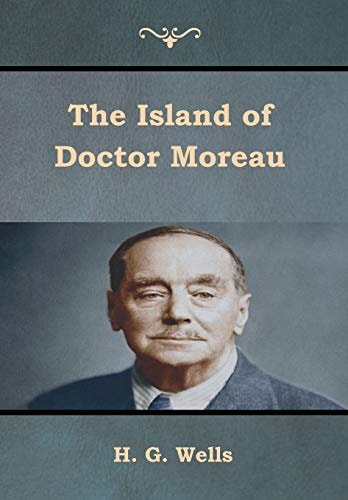
Bibliotech Press
2019
Amazon Digital Services LLC - KDP Print US
2019

Amazon Digital Services LLC - KDP Print US
2019
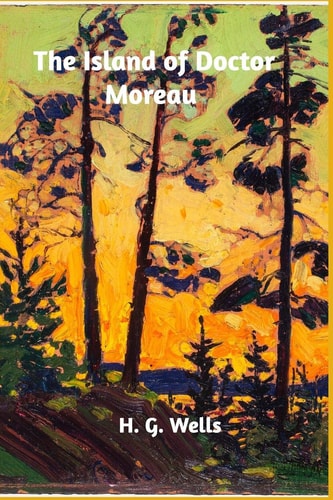
Blurb, Incorporated
2019

Amazon Digital Services LLC - KDP Print US
2019

Amazon Digital Services LLC - KDP Print US
2019
Amazon Digital Services LLC - KDP Print US
2019
Amazon Digital Services LLC - KDP Print US
2018

Amazon Digital Services LLC - KDP Print US
2018

Independently Published
2018

CreateSpace Independent Publishing Platform
2018

CreateSpace Independent Publishing Platform
2018

CreateSpace Independent Publishing Platform
2018

CreateSpace Independent Publishing Platform
2018

CreateSpace Independent Publishing Platform
2018

CreateSpace Independent Publishing Platform
2018
e-artnow
2017

CreateSpace Independent Publishing Platform
2017

Independently Published
2017

CreateSpace Independent Publishing Platform
2017

CreateSpace Independent Publishing Platform
2017

CreateSpace Independent Publishing Platform
2017

CreateSpace Independent Publishing Platform
2017

CreateSpace Independent Publishing Platform
2017
CreateSpace Independent Publishing Platform
2017
CreateSpace Independent Publishing Platform
2017

CreateSpace Independent Publishing Platform
2017

Lulu.com
2017
CreateSpace Independent Publishing Platform
2017

CreateSpace Independent Publishing Platform
2017

CreateSpace Independent Publishing Platform
2017
CreateSpace Independent Publishing Platform
2017

CreateSpace Independent Publishing Platform
2017

CreateSpace Independent Publishing Platform
2017
CreateSpace Independent Publishing Platform
2017
OUP Oxford
2017
Oxford University Press
2017

CreateSpace Independent Publishing Platform
2016

CreateSpace Independent Publishing Platform
2016

CreateSpace Independent Publishing Platform
2016
CreateSpace Independent Publishing Platform
2016

CreateSpace Independent Publishing Platform
2016
CreateSpace Independent Publishing Platform
2015

CreateSpace Independent Publishing Platform
2015

CreateSpace Independent Publishing Platform
2015

CreateSpace Independent Publishing Platform
2014

1st World Library
2006

Huge Print Press
1900
Similar Books



Reader Comments
Share Your Thoughts
No comments yet. Be the first to share your thoughts!