Frankenstein: Or The Modern Prometheus
0
0
As an Amazon Associate and affiliate partner, Menrva Books earns from qualifying purchases. Learn more
Author Description
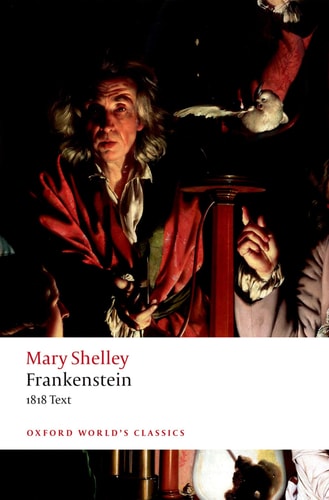
Shelley's suspenseful and intellectually rich gothic tale confronts some of the most important and enduring themes in all of literture—the power of human imagination, the potential hubris of science, the gulf between appearance and essence, the effects of human cruelty, the desire for revenge and the need for forgiveness, and much more. ABOUT THE SERIES: For over 100 years Oxford World's Classics has made available the widest range of literature from around the globe. Each affordable volume reflects Oxford's commitment to scholarship, providing the most accurate text plus a wealth of other valuable features, including expert introductions by leading authorities, helpful notes to clarify the text, up-to-date bibliographies for further study, and much more.
Menrva's Summary
THE PULSE
Victor Frankenstein, a brilliant but reckless scientist, succeeds in creating a sentient being, only to be horrified by his creation and abandon it to a world that rejects it. Driven by a desperate need for knowledge and recognition, Victor pushes the boundaries of natural philosophy, inadvertently setting in motion a chain of events that destroys his personal life. The creature, initially benevolent but hardened by human rejection, seeks retribution against his creator. The narrative employs an epistolary framework, utilizing letters and nested accounts to present the perspectives of Victor, the creature, and the explorer Robert Walton.
INSIDE THE PAGES
- Epistolary narrative structure using letters and journals
- Exploration of the ethics of scientific discovery
- Examination of the psychological effects of social isolation
- Contrast between the sublime beauty of nature and the grotesque nature of the creation
- Philosophical inquiry into the nature of humanity and the soul
- Use of the doppelganger motif between creator and creation
- Gothic atmosphere characterized by desolate landscapes and internal dread
- Intertextual references to Milton's Paradise Lost and Prometheus mythology
THE COLLECTIVE ECHO
Readers and critics frequently analyze the text as a foundational work of science fiction that interrogates the moral responsibilities of the creator. Discussion often centers on the creature's development from an innocent observer to a vengeful antagonist, highlighting the role of societal prejudice in his transformation. The pacing is noted for its shift from the intellectual fervor of Victor's laboratory to the bleak, existential pursuit across the Arctic ice. Scholars often emphasize how the novel functions as a critique of Enlightenment-era hubris and the potential dangers of unchecked ambition. The work remains a central point of reference for debates regarding bioethics and the definition of personhood.
Page Count:
271
Publication Date:
2008-01-01
Publisher:
OUP Oxford
ISBN-10:
0191579629
ISBN-13:
9780191579622
Science Fiction
Horror
classic
English
Gothic
English & College Success
Philosophical
Community Tags
Other Editions(4)

Similar Books