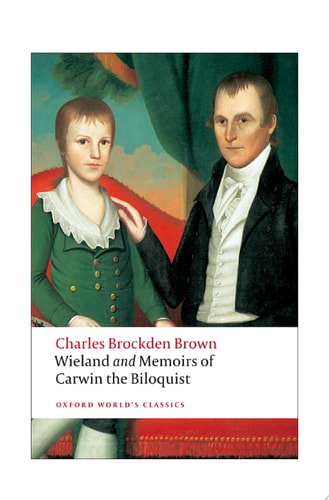
Wieland; or The Transformation, and Memoirs of Carwin, The Biloquist
0
0
As an Amazon Associate and affiliate partner, Menrva Books earns from qualifying purchases. Learn more
Author Description
One of the earliest American novels, Wieland (1798) is a thrilling tale of suspense and intrigue set in rural Pennyslvania in the 1760s. Based on an actual case of a New York farmer who murdered his family, the novel employs Gothic devices and sensational elements such as spontaneous combustion, ventriloquism, and religious fanaticism. The plot turns on the charming but diabolical intruder Carwin, who exercises his power over the narrator, Clara Wieland, and her family, destroying the order and authority of the small community in which they live. Underlying the mystery and horror, however, is a profound examination of the human mind's capacity for rational judgement. The text also explores some of the most important issues vital to the survival of democracy in the new American republic. Brown further considers power and manipulation in his unfinished sequel, Memoirs of Carwin the Biloquist, which traces Carwin's career as a disciple of the utopist Ludloe. ABOUT THE SERIES: For over 100 years Oxford World's Classics has made available the widest range of literature from around the globe. Each affordable volume reflects Oxford's commitment to scholarship, providing the most accurate text plus a wealth of other valuable features, including expert introductions by leading authorities, helpful notes to clarify the text, up-to-date bibliographies for further study, and much more.
Menrva's Summary
THE PULSE
The arrival of a mysterious stranger triggers a series of inexplicable events that dismantle the sanity and safety of the Wieland family. Clara Wieland serves as the narrator, documenting the disintegration of her household as her brother, Theodore, falls victim to religious mania and the manipulative influence of the ventriloquist Carwin. The narrative framework utilizes an epistolary style, forcing the reader to navigate Clara's subjective account of the escalating horror. The characters struggle against the limitations of their own rationalism when confronted with phenomena that defy logical explanation.
INSIDE THE PAGES
- Epistolary narrative structure
- Gothic atmosphere and setting
- Exploration of religious fanaticism
- Use of ventriloquism as a plot device
- Psychological manipulation and power dynamics
- Themes of rationalism versus superstition
- Unreliable narration
- Inclusion of the unfinished sequel Memoirs of Carwin the Biloquist
THE COLLECTIVE ECHO
Discussion often centers on the novel's status as a foundational work of American Gothic literature. Readers frequently highlight the tension between the Enlightenment ideals of the characters and the irrational forces that eventually consume them. Critics often examine how Brown uses the character of Carwin to critique the dangers of unchecked influence and the fragility of social order. The pacing is noted for its intensity, particularly during the scenes involving the family's descent into madness. Many readers appreciate the inclusion of the sequel, which provides additional context for the antagonist's motivations and background.
Page Count:
336
Publication Date:
2009-01-01
Publisher:
OUP Oxford
ISBN-10:
0192669435
ISBN-13:
9780192669438
Horror
Psychological Thriller
Gothic
English
classic
English & College Success
American
Community Tags
Similar Books