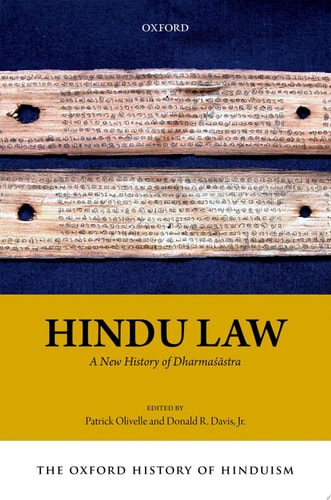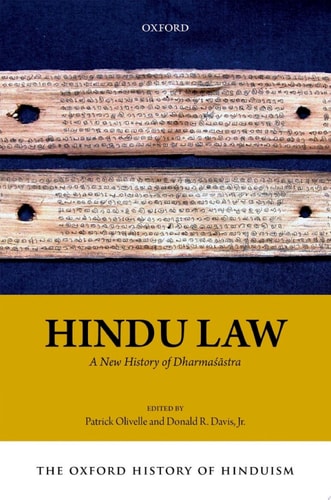
The Oxford History of Hinduism: Hindu Law: A New History of Dharmashastra
0
0
As an Amazon Associate and affiliate partner, Menrva Books earns from qualifying purchases. Learn more
Author Description
Through pointed studies of important aspects and topics of dharma in Dharmaśāstra, this comprehensive collection shows that the history of Hinduism cannot be written without the history of Hindu law. Part One provides a concise overview of the literary genres in which Dharmasastra was written with attention to chronology and historical developments. This study divides the tradition into its two major historical periods—the origins and formation of the classical texts and the later genres of commentary and digest—in order to provide a thorough, but manageable overview of the textual bases of the tradition. Part Two presents descriptive and historical studies of all the major substantive topics of Dharmasastra. Each chapter offers readers with salest knowledge of the debates, transformations, and fluctcating importance of each topic. Indirectly, readers will also gain insight into the ethos or worldview of religious law in Hinduism, enabling them to get a feel for how dharma authors thought and why. Part Three contains brief studies of the impact and reception of Dharmasastra in other South Asian cultural and textual traditions. Finally, Part Four draws inspiration from "critical terms" in contemporary legal and religious studies to analyze Dharmasastra texts. Contributors offer interpretive views of Dharmasastra that start from hermeneutic and social concerns today.
Menrva's Summary
THE THESIS
This volume investigates the historical development, textual evolution, and cultural reception of Hindu law as articulated within the tradition of Dharmashastra. Edited by Patrick Olivelle and Donald R. Davis Jr., the work assembles contributions from leading scholars to argue that the history of Hinduism is inextricably linked to its legal and ethical frameworks. The authors utilize a combination of philological analysis, historical contextualization, and contemporary legal theory to map the transformation of dharma across centuries.
THE SCOPE MAP
What You Will Find
- A chronological overview of Dharmashastra literary genres and textual development.
- Descriptive studies of substantive legal topics including social status, ritual, and ethics.
- Analysis of the reception of Hindu law in broader South Asian cultural traditions.
- Interpretive applications of contemporary hermeneutic and social theory to classical texts.
Scope Limits
- The text focuses primarily on the textual and historical tradition of Dharmashastra rather than modern, post-colonial applications of Hindu law.
- It does not provide a comprehensive sociological survey of contemporary Hindu legal practice.
THE AUTHORITY PERSPECTIVE
Scholars and students of South Asian studies frequently cite this collection as a foundational resource for understanding the complexities of classical Hindu legal thought. Experts highlight the text's ability to balance rigorous philological detail with accessible thematic analysis for a broader academic audience.
Page Count:
571
Publication Date:
2017-01-01
Publisher:
OUP Oxford
ISBN-10:
0191007099
ISBN-13:
9780191007095
Religion
History
Law
Legal History
Hinduism
Dharmashastra
Community Tags
Similar Books