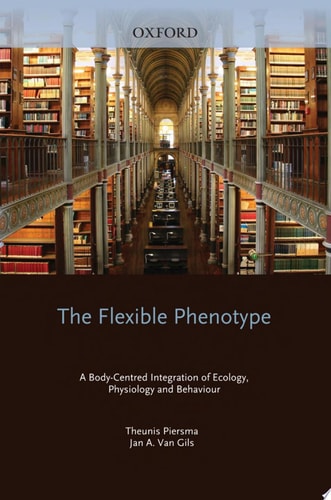
The Flexible Phenotype: A Body-Centred Integration of Ecology, Physiology, and Behaviour
0
0
As an Amazon Associate and affiliate partner, Menrva Books earns from qualifying purchases. Learn more
Author Description
The Flexible Phenotype attempts a true synthesis of physiology, behaviour, and ecology by developing an empirical argument that describes the intimate connections between phenotypes and their environments. It portrays an ecological angle to the rapidly growing extended synthesis in evolutionary biology that incorporates developmental processes, self-organization, and the multiple dimensions of inheritance. The book starts with a synthesis of the principles guiding current research in ecophysiology, functional morphology, and behavioural ecology. Each aspect is illustrated with the detailed results of empirical work on as wide a range of organisms as possible. The integrated story of the flexible phenotype is woven throughout the book on the basis of the authors' long-term research on migrant shorebirds and their invertebrate prey. These birds travel vast distances from one environment to another, and the changing nature of their bodies reflects the varied selection pressures experienced in the course of their globe-spanning migrations. In essence, the authors argue for the existence of direct, measurable, links between phenotype and ecology, mediated by developmental processes. Their book outlines a more encompassing approach to evolutionary ecology, based on first principles in physiology, behaviour, and ecology. It aspires to encourage a further integration of ecology and physiology, as well as fostering a collaborative research agenda between ecologists, physiologists, and developmental biologists.
Menrva's Summary
THE THESIS
This book investigates the mechanisms by which physiological and behavioral flexibility allow organisms to adapt to shifting environmental pressures. The authors, Jan A. van Gils and Theunis Piersma, utilize their extensive research on migratory shorebirds to propose a framework that links individual phenotype development directly to ecological outcomes. By synthesizing principles from ecophysiology and functional morphology, they argue for an evolutionary approach that accounts for developmental processes and self-organization.
THE SCOPE MAP
What You Will Find
- Theoretical framework for integrating physiology, behavior, and ecology
- Empirical data derived from long-term studies of migratory shorebirds and their prey
- Analysis of how environmental selection pressures drive phenotypic change
Scope Limits
- Does not provide a comprehensive review of all evolutionary biology sub-disciplines
- Focuses primarily on avian models rather than a broad survey of all animal phyla
THE AUTHORITY PERSPECTIVE
Experts recognize this work as a significant contribution to the field of integrative biology, particularly for its focus on the intersection of developmental processes and ecological adaptation. Readers frequently note the academic density of the prose, which is tailored for researchers and advanced students in evolutionary ecology.
Page Count:
256
Publication Date:
2010-01-01
Publisher:
OUP Oxford
ISBN-10:
0191640158
ISBN-13:
9780191640155
Science
Biology
Genetics
Ecology
Behavioral Ecology
Physiology
Evolutionary Biology
Community Tags
Similar Books