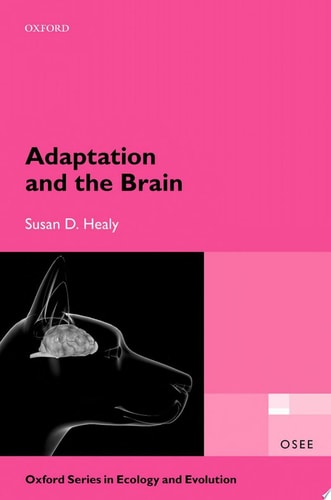
Adaptation and the Brain
0
0
As an Amazon Associate and affiliate partner, Menrva Books earns from qualifying purchases. Learn more
Author Description
Why does brain size vary so widely among vertebrate animal species? What role has natural selection played in shaping the structure and function of the vertebrate brain? This accessible book unravels the myriad adaptive explanations that have built up over decades, providing both a review and a critique of the work that has sought to explain which natural selection pressures have led to changes in brain size. Debate over the causes of variation in brain size, especially within extant humans and during the course of hominid evolution, has persisted for at least a couple of centuries. However, it was not until relatively recently that there has been sufficient data to allow a coherent (and taxonomically widespread) evolutionary perspective to emerge. The comparative approach employed by evolutionary biologists and behavioural ecologists has been particularly enlightening with regard to addressing variation in brain size. However, the extent to which correlational data - currently generated in some profusion - can provide a suitable explanation is not yet clear, and a constructively critical analysis of the relevant data is now timely. Five classes of selection pressure have formed the majority of explanations: ecology, technology, innovation, sex, and sociality. The book starts with a brief description of the difficulties of measuring both brain size and intelligence (cognition), before addressing the evidence for each of these five factors in turn. It argues that although ecology currently provides the most convincing explanation for variation in the size of brain regions, none of the factors yet offers a robust and compelling explanation for variation in whole brain size. The book concludes by looking forwards, suggesting the future steps necessary to reach such an explanation; steps that are challenging but now within reach. Adaptation and the Brain is suitable for graduate level students taking courses in animal behaviour and cognition, behavioural ecology, evolution, and neuroscience.
Menrva's Summary
THE THESIS
This book investigates the evolutionary drivers behind the significant variation in brain size across vertebrate species. Susan D. Healy, a specialist in behavioural ecology, synthesizes decades of research to evaluate the role of natural selection in shaping neural architecture. By critiquing existing correlational data, the author assesses whether current evolutionary models provide sufficient explanations for the diversity of brain sizes observed in nature.
THE SCOPE MAP
What You Will Find
- Analysis of five primary selection pressures: ecology, technology, innovation, sex, and sociality.
- A critical review of methodologies used to measure brain size and cognitive capacity.
- Comparative evolutionary frameworks applied to vertebrate brain development.
Scope Limits
- The text does not provide a definitive, singular explanation for whole-brain size variation.
- The analysis focuses primarily on vertebrate models rather than human-specific neurobiology.
THE AUTHORITY PERSPECTIVE
Experts identify this work as a rigorous critique of current comparative methods in behavioural ecology. Readers frequently note the academic density of the prose, making it a suitable resource for graduate-level study in animal cognition and evolutionary biology.
Page Count:
176
Publication Date:
2021-01-01
Publisher:
OUP Oxford
ISBN-10:
0192592335
ISBN-13:
9780192592330
Science
Ecology
Evolutionary Biology
Physiology
Evolution
Neuroscience
Community Tags
Similar Books