Gaining Control
0
0
As an Amazon Associate and affiliate partner, Menrva Books earns from qualifying purchases. Learn more
Author Description
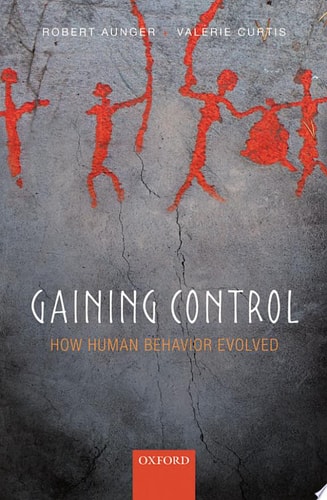
'Gaining Control' tells the story of how human behavioral capacities evolved from those of other animal species. Exploring what is known about the psychological capacities of other groups of animals, the authors reconstruct a fascinating history of our own mental evolution. In the book, the authors see mental evolution as a series of steps in which new mechanisms for controlling behavior develop in different species - starting with early representatives of this kingdom, and leading to a species - us - that can engage in a large number of different types of behavioral control. Key to their argument is the idea that each of these steps — from reflexes to instincts, drives, emotions, and cognitive planning - can be seen as a novel type of psychological adaptation in which information is 'inherited' by an animal from its own behavior through new forms of learning - a form of major evolutionary transition. Thus the mechanisms that result from these steps in increasingly complex behavioral control can also be seen as the fundamental building blocks of psychology. Such a perspective on behaviour has a number of implications for practitioners in fields ranging from experimental psychology to public health. Short, provocative, and insightful, this book will be of great interest and use to evolutionary psychologists and biologists, anthropologists and the scientific community as a whole.
Menrva's Summary
THE THESIS
This book investigates the evolutionary trajectory of human behavioral capacities by framing mental evolution as a series of adaptive steps in behavioral control mechanisms. The authors, Robert Aunger and Valerie Curtis, utilize a framework of evolutionary biology and psychology to argue that each developmental stage—from basic reflexes to complex cognitive planning—represents a novel psychological adaptation. By positing that information is inherited through behavior via new forms of learning, they present a model of major evolutionary transitions that define the fundamental building blocks of human psychology.
THE SCOPE MAP
What You Will Find
- A comparative analysis of psychological capacities across various animal species.
- A hierarchical model of behavioral control mechanisms including reflexes, instincts, drives, emotions, and cognitive planning.
- An evolutionary framework linking behavioral inheritance to psychological adaptation.
Scope Limits
- The text does not provide an exhaustive survey of every known animal behavior.
- It does not focus on clinical pathology or individual therapeutic interventions.
THE AUTHORITY PERSPECTIVE
Experts and researchers in the fields of evolutionary psychology and anthropology recognize this work as a concise, theoretical synthesis of behavioral evolution. Readers frequently note the academic density of the prose and the provocative nature of the authors' evolutionary claims.
Page Count:
200
Publication Date:
2015-01-01
Publisher:
Oup Oxford
ISBN-10:
0191002844
ISBN-13:
9780191002847
Evolutionary Psychology
Anthropology
Behavioral Science
Biology
Community Tags
Similar Books