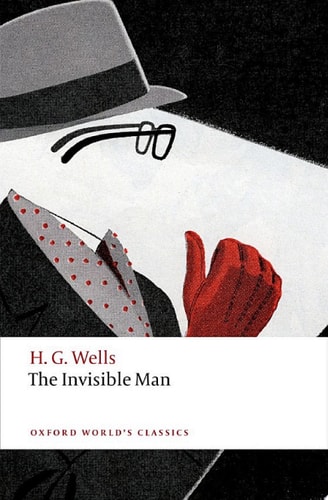
The Invisible Man: A Grotesque Romance
0
0
As an Amazon Associate and affiliate partner, Menrva Books earns from qualifying purchases. Learn more
Author Description
'The man's become inhuman... He has cut himself off from his kind. His blood be upon his own head.' One night in the depths of winter, a bizarre and sinister stranger wrapped in bandages and eccentric clothing arrives in a remote English village. His peculiar, secretive activities in the room he rents spook the locals. Speculation about his identity becomes horror and disbelief when the villagers discover that, beneath his disguise, he is invisible. Griffin, as the man is called, is an embittered scientist who is determined to exploit his extraordinary gifts, developed in the course of brutal self-experimentation, in order to conduct a Reign of Terror on the sleepy inhabitants of England. As the police close in on him, he becomes ever more desperate and violent. In this pioneering novella, subtitled 'A Grotesque Romance', Wells combines comedy, both farcical and satirical, and tragedy - to superbly unsettling effect. Since its publication in 1897, The Invisible Man has haunted not only popular culture (in particular cinema) but also the greatest and most experimental novels of the twentieth century.
Menrva's Summary
THE PULSE
A scientist discovers the secret to invisibility, only to find that his newfound power leads to moral decay and a violent confrontation with society. Griffin, a brilliant but volatile researcher, achieves the ability to render himself unseen through a series of dangerous experiments. His objective is to maintain his autonomy and exert power over those who fear him, but he is constantly thwarted by his own physical vulnerability and the mounting suspicion of the villagers in Iping. The narrative unfolds through a third-person perspective that shifts from the confusion of the local townspeople to the frantic, desperate internal state of the protagonist as he descends into madness. The world is grounded in late 19th-century English realism, which serves as a stark contrast to the impossible, scientific anomaly at the center of the story.
INSIDE THE PAGES
- Scientific obsession as a catalyst for social alienation
- The contrast between rural village life and urban scientific ambition
- Exploration of the ethical boundaries of self-experimentation
- Use of farce and dark humor to heighten the sense of unease
- The physical limitations and consequences of invisibility
- A non-linear reveal of the protagonist's backstory
- Themes of power, invisibility, and the loss of humanity
- Atmospheric setting in a remote, winter-bound English village
THE COLLECTIVE ECHO
Readers and critics frequently note the effectiveness of Wells's ability to blend scientific speculation with a chilling character study of a man losing his grip on reality. Discussion often centers on the protagonist's descent into villainy and whether his actions are a result of his isolation or an inherent flaw in his character. Many highlight the pacing as brisk and efficient, moving quickly from the initial mystery of the stranger to the chaotic climax. The work is often cited for its influence on the science fiction genre, particularly in how it treats the consequences of unchecked technological advancement. Readers appreciate the balance between the satirical depiction of village life and the genuinely unsettling nature of the invisible antagonist.
Page Count:
192
Publication Date:
2016-01-01
Publisher:
OUP Oxford
ISBN-10:
0191007218
ISBN-13:
9780191007217
Science Fiction
Thriller
Horror
English
English & College Success
classic
Victorian
Science Fiction