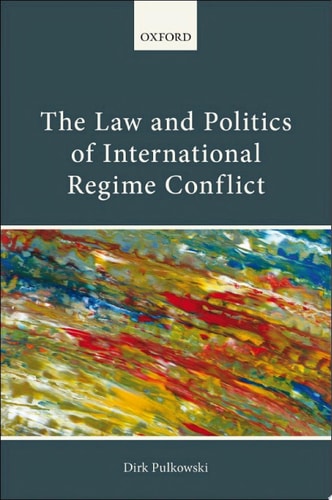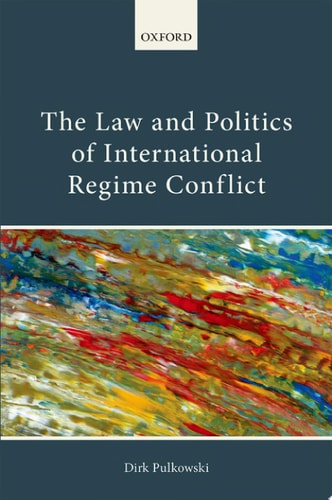
Law and Politics of International Regime Conflict
0
0
As an Amazon Associate and affiliate partner, Menrva Books earns from qualifying purchases. Learn more
Author Description
The International Order Is Constituted By A Plurality Of International Regimes - Institutionalized Arrangements In Different Issue Areas That Possess Their Own Norms And Procedures. The Present Book Examines How Conflict Among Regimes May Arise And Probes The Role That International Law Can Play In Managing Such Conflict. Throughout The Book, The Example Of Trade In Cultural Products Is Used To Illustrate The Evolution Of Regime Conflict And The Potential For Its Management. Conflicts Between The Goals Of 'free Trade' And 'cultural Diversity' Have Notably Surfaced Within The World Trade Organization (wto) And The United Nations Educational, Scientific And Cultural Organization (unesco). As A Result, There Is A Potential For Conflict Among Wto Law, The Unesco's Convention On The Protection And Promotion Of The Diversity Of Cultural Expressions, And Human Rights. The Book Posits That Three Dimensions Are Characteristic For Regime Conflict: First, Regime Conflict Is A Function Of Conflict Among Different Social Goals Or Values. Second, Such Goal Conflicts Are Institutionalized Through The Interaction Of A Variety Of Political Actors Struggling For Influence, Often In Intergovernmental Organizations. Third, Regime Conflict May Manifest Itself In Conflicts Of Legal Rules. If A State Acts In Conformity With The Rules Of One Regime, Its Conduct May Trigger A Violation Of The Rules Of Another Regime. The Author Argues That, While International Law Cannot Be Construed As A Fully Integrated And Unified System, It Does Provide A Common Language For Different Regimes To Engage With Each Other. The Shared Discourse Rules Of International Law Enable A Degree Of Coordination Of The Policies Of Different Regimes, Notably Through Techniques Of Interpretation And Legal Priority Rules. International Law Contributes To The Management Of Regime Conflict By Providing Commonly Accepted Reasons For Choosing Among Competing Policy Goals.
Menrva's Summary
THE THESIS
This book investigates how international law functions to manage conflicts arising from the overlapping norms and procedures of diverse international regimes. Dirk Pulkowski, an expert in international legal theory, examines the structural tensions between institutionalized global arrangements. He argues that while international law lacks a fully integrated system, it provides a common discourse that facilitates policy coordination and conflict resolution among competing global regimes.
THE SCOPE MAP
What You Will Find
- A theoretical framework defining regime conflict across social, institutional, and legal dimensions.
- An analysis of the interaction between the World Trade Organization (WTO) and UNESCO.
- Methodologies for utilizing interpretation techniques and legal priority rules to resolve normative clashes.
Scope Limits
- The text does not provide a comprehensive survey of all existing international regimes.
- It focuses primarily on the trade of cultural products as a case study rather than exhaustive coverage of every legal sector.
THE AUTHORITY PERSPECTIVE
Legal scholars and practitioners recognize this work as a significant contribution to the study of fragmentation in international law. Readers frequently note the academic density of the prose, which is intended for an audience familiar with international legal theory and institutional governance.
Page Count:
460
Publication Date:
2014-01-01
Publisher:
Oxford University Press, Incorporated
ISBN-10:
0191003832
ISBN-13:
9780191003837
International relations
International Cooperation
International Law
Trade Law
Community Tags
Similar Books