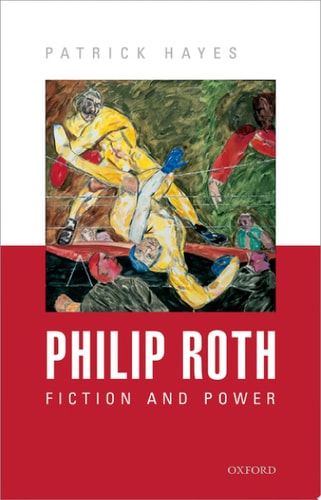
Philip Roth: Fiction and Power
0
0
As an Amazon Associate and affiliate partner, Menrva Books earns from qualifying purchases. Learn more
Author Description
When we try to find words to express our most visceral and primary responses to literature, we are often inclined to speak of its power. But in academic contexts, that intuitive feeling for the vividness, energy, and special intensity of literary experience is all too often subdued, and exchanged for a supposedly more sophisticated discussion of its ethical or political significance. Philip Roth has long thumbed his nose at the 'virtue racket', as one of his characters called it, and his fiction has repeatedly satirised the moralistic idiom that tends to rule the public discussion of literature. In doing so he has earned the disapproval of an unusually wide range of university teachers and intellectuals. Philip Roth: Fiction and Power argues that Roth's importance derives precisely from his revaluation of what counts as sophisticated and serious in our response to literature. As well as examining how Roth emerged as a writer, and defining the main lines of influence on him, the book measures his impact on the dominant ways of thinking about literary value in post-war America. Attention is given to particular questions: about the place of emotion and affective experience, the nature and value of tragedy, the relevance of art to life, the relationship between literature and the unconscious, the concept of the author, the idea of a literary canon, and the ways that fiction illuminates America's complex post-war history. The book will be of importance to readers of modern American literature, and indeed to anyone interested in why literature matters.
Menrva's Summary
THE THESIS
This book investigates how Philip Roth’s body of work challenges established academic and moralistic frameworks regarding the value and function of literature. Patrick Hayes, a scholar of modern literature, utilizes a critical analysis of Roth’s career to argue that the author’s resistance to the 'virtue racket' forces a re-evaluation of how readers and critics define literary seriousness. By examining the intersection of Roth’s fiction with post-war American history, the text posits that his work serves as a necessary disruption to conventional intellectual discourse.
THE SCOPE MAP
What You Will Find
- Analysis of Roth’s emergence as a writer and his primary literary influences.
- Examination of the relationship between literature, the unconscious, and the concept of the author.
- Discussion of the role of emotion, tragedy, and the relevance of art to life within the American canon.
Scope Limits
- The text does not provide a comprehensive biography of Roth’s private life.
- It does not offer a chronological summary of every novel in Roth’s bibliography.
THE AUTHORITY PERSPECTIVE
Scholars and critics view this work as a significant contribution to the study of Roth’s place in the American literary canon. Readers frequently note the academic density of the prose, which is intended for those interested in the intersection of literary theory and cultural history.
Page Count:
276
Publication Date:
2014-01-01
Publisher:
OUP Oxford
ISBN-10:
0191003131
ISBN-13:
9780191003134
Biography
Non-Fiction
English & College Success
American
Literary theory
Literary Criticism
English
Community Tags
Similar Books