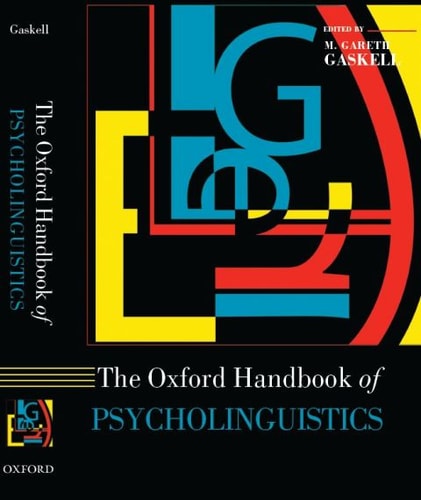
The Oxford Handbook of Psycholinguistics
0
0
As an Amazon Associate and affiliate partner, Menrva Books earns from qualifying purchases. Learn more
Author Description
The ability to communicate through spoken and written language is one of the defining characteristics of the human race, yet it remains a deeply mysterious process. The young science of psycholinguistics attempts to uncover the mechanisms and representations underlying human language. This interdisciplinary field has seen massive developments over the past decade, with a broad expansion of the research base, and the incorporation of new experimental techniques such as brain imaging and computational modelling. The result is that real progress is being made in the understanding of the key components of language in the mind. The 'Oxford Handbook of Psycholinguistics' brings together the views of 75 leading researchers in psycholinguistics to provide a comprehensive and authoritative review of the current state of the art in psycholinguistics. With almost 50 chapters written by experts in the field, the range and depth of coverage is unequalled. The contributors are eminent in a wide range of fields, including psychology, linguistics, human memory, cognitive neuroscience, bilingualism, genetics, development and neuropsychology. Their contributions are organised into six themed sections, covering word recognition, the mental lexicon, comprehension and discourse, language production, language development, and perspectives on psycholinguistics. The breadth of coverage, coupled with the accessibility of the short chapter format should make the handbook essential reading for both students and researchers in the fields of psychology, linguistics and neuroscience.
Menrva's Summary
THE THESIS
This handbook investigates the underlying cognitive mechanisms and neural representations that enable human language production and comprehension. Edited by Gareth Gaskell, the volume synthesizes contributions from 75 prominent researchers across psychology, linguistics, and neuroscience. It provides a structured framework for understanding language as a cognitive process, integrating traditional experimental methods with contemporary advancements in brain imaging and computational modeling.
THE SCOPE MAP
What You Will Find
- Comprehensive analysis of word recognition and the mental lexicon
- Examination of language comprehension, discourse, and production
- Research on language development and bilingualism
- Integration of cognitive neuroscience and genetic perspectives
Scope Limits
- Does not provide a singular unified theory of language
- Excludes exhaustive historical surveys of early 20th-century linguistic philosophy
THE AUTHORITY PERSPECTIVE
Experts recognize this volume as a foundational reference for students and professionals in cognitive science. Readers frequently note the academic density of the prose, which is balanced by the accessible, modular format of the individual chapters.
Page Count:
888
Publication Date:
2009-01-01
Publisher:
OUP Oxford
ISBN-10:
0191015709
ISBN-13:
9780191015700
Psychology
English
Linguistics
English & College Success
Neuroscience
Academic
Reference
Community Tags
Similar Books