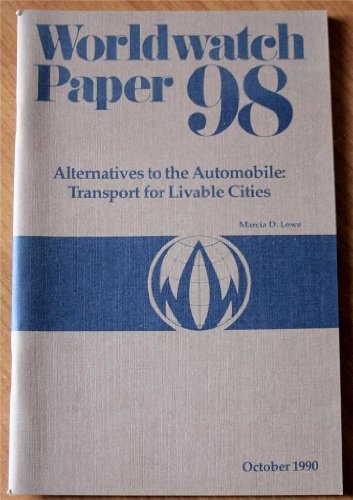
Alternatives to the Automobile: Transport for Livable Cities
0
0
As an Amazon Associate and affiliate partner, Menrva Books earns from qualifying purchases. Learn more
Author Description
The automobile once promised a dazzling world of speed, freedom, and convenience, magically conveying people wherever the road would take them. Given these alluring qualities, it is not surprising the people around the world enthusiastically embraced the dream of car ownership. But societies that have built their transport systems around the automobile are now waking up to a much harsherreality. The problems created by overreliance on the car are outweighing the benefits. These problems are numerous and widespread. Traffic congestion and air polution plague all major cities, and oil dependence makes economies vulnerable. Metropolises with streets designed for cars instead of people are increasingly unlivable. In developing countries, automobiles serve only a small elite and leave the vast majority with inadequate transport. In Eastern Europe and the Soviet Union, recent reforms could add the problems of automobile dependence to already overwhelming economic and environmental crises. Improving automobile technology can never completely solve these troubles. Enhanced fuel efficiency and polution control are at least partly offset by the sheer amount of additional driving, as some 35 million new cars roll off assembly lines each year. Even in the United States, where emissions controls are most effective, air polution is worsening. And no matter how clean or fuel-efficient automobiles become, they still cause traffic jams. Automobile dominance creates a set of problems so relentless that societies in coming decades will have no choice but to seek transport alternatives. A new, more rational approach to transportation is need, one that puts the automobile in its rightful place asone among many options for travel.
Menrva's Summary
THE THESIS
This paper investigates the systemic failures of automobile-dependent urban planning and argues for the necessity of diversifying transportation infrastructure to create more livable cities. Marcia D. Lowe, a researcher associated with the Worldwatch Institute, utilizes global environmental and economic data to demonstrate that technological improvements to vehicles are insufficient to mitigate the negative externalities of car-centric societies. The text posits that prioritizing public transit, cycling, and pedestrian-friendly design is essential for economic stability and environmental health.
THE SCOPE MAP
What You Will Find
- Analysis of traffic congestion and air pollution in global metropolitan areas
- Evaluation of the limitations of fuel efficiency and emission control technologies
- Case studies regarding transport inequality in developing nations and Eastern Europe
Scope Limits
- Does not provide detailed engineering specifications for new transit vehicles
- Does not offer a comprehensive legislative roadmap for specific municipal implementation
THE AUTHORITY PERSPECTIVE
Experts recognize this paper as a foundational document in the discourse on sustainable urbanism and the critique of car culture. Readers frequently note the clarity of the author's argument regarding the inherent limitations of technological fixes for systemic urban planning issues.
Page Count:
49
Publication Date:
1990-01-01
Publisher:
Worldwatch Institute
ISBN-10:
0191010804
ISBN-13:
9780191010804
urban planning
Sustainability
Public Policy
Transportation
Local transit
Community Tags
Similar Books