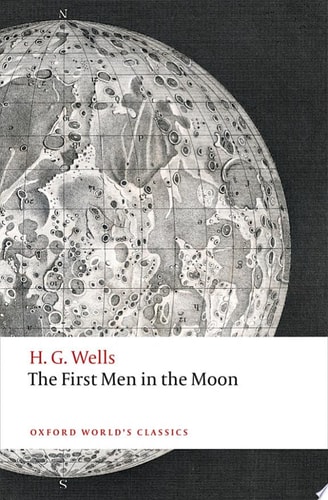
The First Men in the Moon
0
0
As an Amazon Associate and affiliate partner, Menrva Books earns from qualifying purchases. Learn more
Author Description
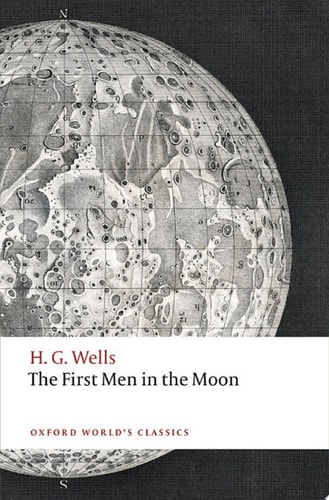
At the village of Lympne, on the south coast of England, the 'most uneventful place in the world' the failed playwright Mr Bedford meets the brilliant inventor Mr Cavor, and together they invade the moon. Dreaming respectively of scientific renown and of mineral wealth, they fashion a sphere from the gravity-defying substance Cavorite and go where no human has gone before. They expect a dead world, but instead they find lunar plants that grow in a single day, giant moon-calves and the ant-like Selenites, the super-adapted inhabitants of the moon's utopian society. The First Men in the Moon is both an inspired and imaginative fantasy of space travel and alien life, and a satire of turn-of-the-century Britain and of utopian dreams of a wholly ordered and rational society.
Menrva's Summary
THE PULSE
The arrival of two disparate men on the lunar surface triggers a confrontation with an advanced, subterranean civilization that challenges their human perceptions of society. Mr. Bedford, a failed businessman seeking fortune, and Mr. Cavor, an eccentric scientist, construct a vessel using the gravity-defying material 'cavorite' to reach the moon. Their objective shifts from exploration to survival as they encounter the complex, insectoid Selenites. The narrative is presented primarily through the perspective of Bedford, documenting the transition from scientific curiosity to the harsh realities of extraterrestrial captivity.
INSIDE THE PAGES
- First-person narrative perspective
- Scientific speculation regarding gravity-defying materials
- Exploration of alien biology and lunar ecology
- Satirical commentary on British social structures
- Contrast between individualistic human ambition and collective alien order
- Depiction of a highly specialized, caste-based society
- Pacing that shifts from terrestrial preparation to lunar discovery
- Philosophical inquiry into the nature of utopian governance
THE COLLECTIVE ECHO
Readers frequently highlight the contrast between the grounded, materialistic motivations of the human protagonists and the bizarre, highly organized nature of the lunar society. Discussion often centers on how the author uses the Selenites to critique the rigid class structures and imperialist attitudes prevalent in turn-of-the-century Britain. Critics often point to the effectiveness of the world-building, particularly the imaginative descriptions of lunar flora and the specialized physiology of the alien inhabitants. The work is recognized for its influence on the development of the space travel genre, balancing technical speculation with social commentary. Many readers appreciate the shift in tone as the story progresses from a lighthearted adventure to a more somber reflection on human nature.
Page Count:
256
Publication Date:
2016-01-01
Publisher:
Oxford University Press
ISBN-10:
0191015075
ISBN-13:
9780191015076
Adventure
Science Fiction
Satire
classic
Utopian
Community Tags
Other Editions(56)

True Sign Publishing House Private Limited
2023
Default edition
Fox Eye Publishing
2022
Independently Published
2021

Repro India Limited
2021

Independently Published
2021

Independently Published
2020

Independently Published
2019

Independently Published
2019

Amazon Digital Services LLC - KDP Print US
2019

Amazon Digital Services LLC - KDP Print US
2019

Independently Published
2019

Independently Published
2019

Amazon Digital Services LLC - KDP Print US
2019

Independently Published
2019

Independently Published
2019

Independently Published
2019
Independently Published
2019

Independently Published
2019

Independently Published
2019

Independently Published
2019

Independently Published
2019

Amazon Digital Services LLC - KDP Print US
2019

Amazon Digital Services LLC - KDP Print US
2019

Amazon Digital Services LLC - KDP Print US
2019

Amazon Digital Services LLC - KDP Print US
2019

Independently Published
2019

Amazon Digital Services LLC - KDP Print US
2018

Independently Published
2018

Amazon Digital Services LLC - KDP Print US
2018

Amazon Digital Services LLC - KDP Print US
2018

Amazon Digital Services LLC - KDP Print US
2018

Amazon Digital Services LLC - KDP Print US
2018

Amazon Digital Services LLC - KDP Print US
2018

CreateSpace Independent Publishing Platform
2018

CreateSpace Independent Publishing Platform
2018

Amazon Digital Services LLC - KDP Print US
2018

Blurb, Incorporated
2018

Independently Published
2018

Independently Published
2017

CreateSpace Independent Publishing Platform
2017

CreateSpace Independent Publishing Platform
2017

CreateSpace Independent Publishing Platform
2017

CreateSpace Independent Publishing Platform
2017
Read Books Ltd.
2016

Read Books
2016

CreateSpace Independent Publishing Platform
2016

CreateSpace Independent Publishing Platform
2016

Independent Publishers Group (Chicago Review Press)
2016
OUP Oxford
2016
Oxford University Press
2016

CreateSpace Independent Publishing Platform
2015

CreateSpace Independent Publishing Platform
2015

CreateSpace Independent Publishing Platform
2015

CreateSpace Independent Publishing Platform
2013

Oxford University Press
1995

Project Gutenberg
1900
Similar Books














Reader Comments
Share Your Thoughts
No comments yet. Be the first to share your thoughts!