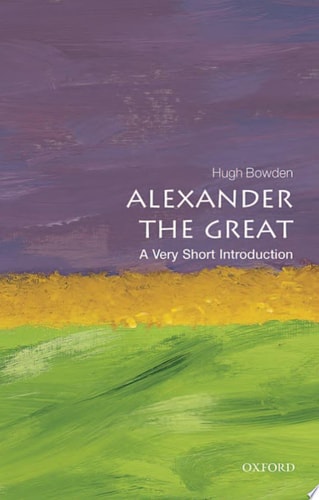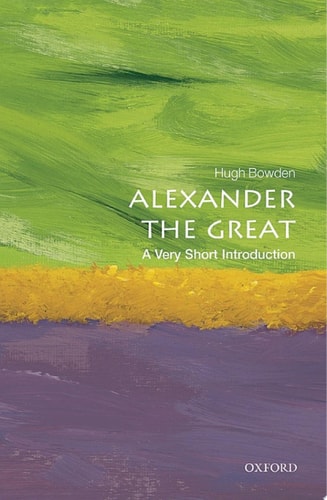
Alexander the Great: A Very Short Introduction
0
0
As an Amazon Associate and affiliate partner, Menrva Books earns from qualifying purchases. Learn more
Author Description
Alexander the Great became king of Macedon in 336 BC, when he was only 20 years old, and died at the age of 32, twelve years later. During his reign he conquered the Achaemenid Persian Empire, the largest empire that had ever existed, leading his army from Greece to Pakistan, and from the Libyan desert to the steppes of Central Asia. His meteoric career, as leader of an alliance of Greek cities, Pharaoh of Egypt, and King of Persia, had a profound effect on the world he moved through. Even in his lifetime his achievements became legendary and in the centuries that following his story was told and retold throughout Europe and the East. Greek became the language of power in the Eastern Mediterranean and much of the Near East, as powerful Macedonian dynasts carved up Alexander's empire into kingdoms of their own, underlaying the flourishing Hellenistic civilization that emerged after his death. But what do we really know about Alexander? In this Very Short Introduction, Hugh Bowden goes behind the usual historical accounts of Alexander's life and career. Instead, he focuses on the evidence from Alexander's own time -- letters from officials in Afghanistan, Babylonian diaries, records from Egyptian temples -- to try and understand how Alexander appeared to those who encountered him. In doing so he also demonstrates the profound influence the legends of his life have had on our historical understanding and the controversy they continue to generate worldwide. ABOUT THE SERIES: The Very Short Introductions series from Oxford University Press contains hundreds of titles in almost every subject area. These pocket-sized books are the perfect way to get ahead in a new subject quickly. Our expert authors combine facts, analysis, perspective, new ideas, and enthusiasm to make interesting and challenging topics highly readable.
Menrva's Summary
THE THESIS
This book investigates the historical reality of Alexander the Great by distinguishing between contemporary evidence and the later legends that have obscured his true impact. Hugh Bowden, a professor of Ancient History at King's College London, utilizes a methodology that prioritizes primary source material from the fourth century BC over the romanticized accounts written by later historians. By examining Babylonian diaries, Egyptian temple records, and administrative letters, the author constructs a framework that evaluates Alexander through the eyes of the diverse populations he encountered rather than through the lens of later myth-making.
THE SCOPE MAP
What You Will Find
- Analysis of primary source evidence from the Achaemenid Persian Empire and Hellenistic period.
- Examination of the cultural and political shifts in the Eastern Mediterranean and Near East.
- Discussion of the transition from Macedonian kingship to the Hellenistic civilization.
Scope Limits
- The text does not provide a comprehensive military biography or a detailed tactical analysis of every battle.
- It does not focus on the extensive medieval or modern literary reception of the Alexander Romance.
THE AUTHORITY PERSPECTIVE
Experts and readers frequently note the academic density of the prose, which manages to remain accessible for those new to the subject. It is widely regarded as a foundational text for understanding the historiographical challenges inherent in studying the life of Alexander the Great.
Page Count:
144
Publication Date:
2014-01-01
Publisher:
OUP Oxford
ISBN-10:
0191016365
ISBN-13:
9780191016363
Biography
History
Greece
Ancient History
Military History