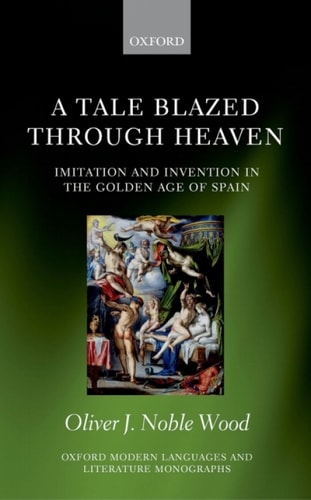
A Tale Blazed Through Heaven: Imitation and Invention in the Golden Age of Spain
0
0
As an Amazon Associate and affiliate partner, Menrva Books earns from qualifying purchases. Learn more
Author Description
A Tale Blazed Through Heaven examines developments in the representation of the classical tale of Mars, Venus, and Vulcan in the literature and painting of the Golden Age of Spain (c.1526-1681). Anchored in close analysis of individual primary texts, the five chapters that comprise this study assess how poets and painters breathed new life into the tale inherited from Homer, Ovid, and others, examining some of the ways in which the story of Mars, Venus, and Vulcan was disguised, developed, expanded, mocked, combined with or played off against different subjects, or otherwise modified in order to pique the interest of successive generations of readers and viewers. Each chapter discusses what particular changes and shifts in emphasis reveal about the tale itself, specific renderings, the aims and intentions of individual poets and painters, and the wider context of the literary and visual culture of Early Modern Spain. Discussing a range of poems by both canonical (Garcilaso de la Vega, Luis de Góngora, Lope de Vega, etc.) and less well-known writers (Juan de la Cueva, Alonso de Castillo Solórzano, Salvador Jacinto Polo de Medina, etc.), and culminating in detailed examination of select mythological works by Philip IV's court painter, Diego Velázquez, this book sheds light on questions relating to aspects of classical reception in the Renaissance, the rise of specific poetic styles (epic, mock-epic, burlesque, etc.), the interplay between the sister arts of poetry and painting, and the continual process of imitation and invention that was one of the defining features of the Spanish Golden Age.
Menrva's Summary
THE THESIS
This study investigates how Golden Age Spanish writers and painters adapted the classical myth of Mars, Venus, and Vulcan to reflect evolving cultural and aesthetic priorities. Oliver J. Noble-Wood, a scholar of Spanish literature, utilizes a comparative framework to analyze how canonical and lesser-known artists transformed inherited Greco-Roman narratives. By examining the interplay between textual and visual media, the author argues that the constant process of imitation and invention served as a primary driver for artistic innovation during this period.
THE SCOPE MAP
What You Will Find
- Analysis of the Mars, Venus, and Vulcan myth across Spanish literature and painting from 1526 to 1681.
- Comparative studies of poetic styles including epic, mock-epic, and burlesque.
- Detailed examinations of mythological works by Diego Velázquez.
- Close readings of texts by Garcilaso de la Vega, Luis de Góngora, and Lope de Vega.
Scope Limits
- The study focuses specifically on the reception of one particular classical myth rather than a broad survey of all mythological themes.
- The analysis is restricted to the cultural context of Early Modern Spain.
THE AUTHORITY PERSPECTIVE
Scholars recognize this monograph as a rigorous contribution to the field of classical reception studies within the Spanish Golden Age. The text is noted for its academic density and its precise, scholarly approach to the intersection of visual and literary arts.
Page Count:
304
Publication Date:
2014-01-01
Publisher:
OUP Oxford
ISBN-10:
0191016993
ISBN-13:
9780191016998
Art History
Classical Mythology
Criticism history
English & College Success
Cultural History
Literary Criticism
English
Spanish literature
Community Tags
Similar Books