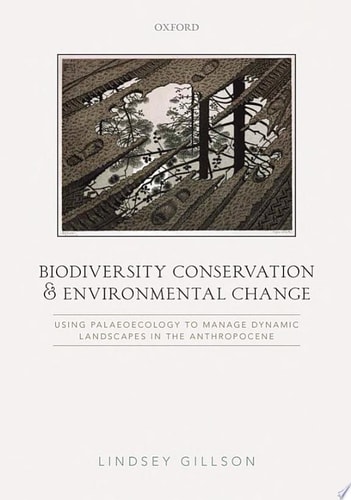
Biodiversity Conservation and Environmental Change: Using Palaeoecology to Manage Dynamic Landscapes in the Anthropocene
0
0
As an Amazon Associate and affiliate partner, Menrva Books earns from qualifying purchases. Learn more
Author Description
Ecosystems today are dynamic and complex, leaving conservationists faced with the paradox of conserving moving targets. New approaches to conservation are now required that aim to conserve ecological function and process, rather than attempt to protect static snapshots of biodiversity. To do this effectively, long-term information on ecosystem variability and resilience is needed. While there is a wealth of such information in palaeoecology, archaeology, and historical ecology, it remains an underused resource by conservation ecologists. In bringing together the disciplines of neo- and palaeoecology and integrating them with conservation biology, this novel text illustrates how an understanding of long-term change in ecosystems can in turn inform and influence their conservation and management in the Anthropocene. By looking at the history of traditional management, climate change, disturbance, and land-use, the book describes how a long-term perspective on landscape change can inform current and pressing conservation questions such as whether elephants should be culled, how best to manage fire, and whether ecosystems can or should be "re-wilded" Biodiversity Conservation and Environmental Change is suitable for senior undergraduate and post-graduate students in conservation ecology, palaeoecology, biodiversity conservation, landscape ecology, environmental change and natural resource management. It will also be of relevance and use to a global market of conservation practitioners, researchers, educators and policy-makers.
Menrva's Summary
THE THESIS
This text investigates how long-term ecological data derived from palaeoecology can be integrated into modern conservation strategies to manage dynamic landscapes in the Anthropocene. Lindsey Gillson, an expert in environmental change, argues that traditional conservation efforts often fail by attempting to preserve static snapshots of biodiversity. By synthesizing neo-ecology and palaeoecology, the author provides a framework for understanding ecosystem resilience and variability over extended timescales to inform contemporary management decisions.
THE SCOPE MAP
What You Will Find
- Analysis of historical ecology, archaeology, and palaeoecological data sets.
- Methodologies for integrating long-term environmental change into current conservation planning.
- Case studies on fire management, elephant population control, and re-wilding initiatives.
Scope Limits
- The text focuses primarily on ecological and environmental management rather than political or socio-economic policy implementation.
- It assumes a foundational knowledge of ecological principles, limiting its utility for absolute beginners.
THE AUTHORITY PERSPECTIVE
Experts identify this work as a bridge between historical environmental data and practical conservation application. Readers frequently note the academic density of the prose, which serves as a rigorous resource for graduate-level students and professional practitioners.
Page Count:
236
Publication Date:
2015-01-01
Publisher:
OUP Oxford
ISBN-10:
0191022101
ISBN-13:
9780191022104
Ecology
Anthropocene Studies
Biological Diversity
Conservation Biology
Biodiversity conservation
Palaeoecology
Community Tags
Similar Books