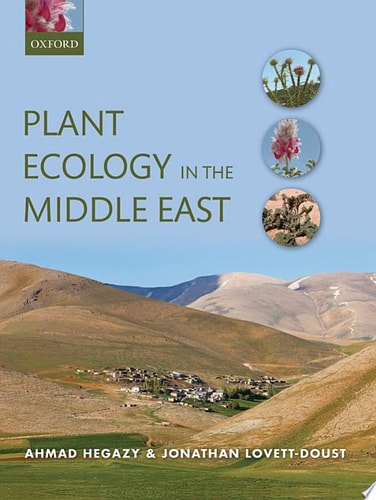
Plant Ecology in the Middle East
0
0
As an Amazon Associate and affiliate partner, Menrva Books earns from qualifying purchases. Learn more
Author Description
This Advanced Textbook Explores The Intriguing Flora And Plant Ecology Of The Middle East, Framed By A Changing Desert Landscape, Global Climate Change, And The Arc Of Human History. This Vast Region Has Been Largely Under-recognized, Under-studied, And Certainly Under-published, Due In Part To The Challenges Posed To Research By Political Disputes And Human Conflict, And A Treatise On The Subject Is Now Timely. The Book Integrates Middle Eastern Plant Geography And Its Major Drivers (geo-tectonics, Seed And Fruit Dispersal, Plant Functional Types, Etc.) With The Principles Of Plant Ecology. The Authors Include The Many Specialized Adaptations To Desert And Dryland Ecosystems Including Succulence, Water-conserving Photosynthesis, And A Remarkable Range Of Other Life History Strategies. They Explore The Formation Of 'climate Relicts', And Describe The Long History Of Domestication In The Region Together With The Many Reciprocal Effects Of Agriculture On Plant Ecology. The Book Concludes By Discussing Conservation In The Region, Highlighting Five Regional Biodiversity Hotspots Where The Challenges Of Desertification, Habitat Loss, And Other Threats To Plant Biodiversity Are Particularly Acute. Plant Ecology In The Middle East Is A Timely Synthesis Of The Field, Setting A New Baseline For Future Research. It Will Be Important Reading For Both Undergraduate And Graduate Students Taking Courses In Plant Ecology, Evolution, Systematics, Biodiversity, And Conservation, And Will Also Be Of Interest And Use To A Professional Audience Of Botanists, Conservation Biologists, And Practitioners Working In Dryland Ecosystems.
Menrva's Summary
THE THESIS
This text investigates the complex interplay between the unique flora of the Middle East and the environmental, geological, and anthropogenic forces that shape its distribution and survival. Authors Ahmad Hegazy and Jonathan Lovett-Doust, both established experts in ecological research, synthesize existing data to provide a comprehensive framework for understanding dryland plant ecology. They argue that the region's biodiversity is defined by specialized evolutionary adaptations and a long history of human interaction, necessitating a structured approach to conservation in the face of modern climate change.
THE SCOPE MAP
What You Will Find
- Analysis of geo-tectonics and seed dispersal mechanisms in arid environments
- Examination of plant functional types and life history strategies like succulence
- Review of the historical impact of agriculture on regional plant ecology
- Identification of five primary biodiversity hotspots within the Middle East
Scope Limits
- Does not provide an exhaustive catalog of every plant species in the region
- Does not focus on non-botanical wildlife or zoological conservation efforts
THE AUTHORITY PERSPECTIVE
Experts identify this work as a foundational text that addresses a significant gap in regional botanical literature. Readers frequently note the academic density of the prose, making it most suitable for university-level students and professional researchers in the field of dryland ecology.
Page Count:
352
Publication Date:
2016-01-01
Publisher:
Oxford University Press
ISBN-10:
0191078735
ISBN-13:
9780191078736
Science
Ecology
Conservation Biology
Middle Eastern
Botany
Community Tags
Similar Books