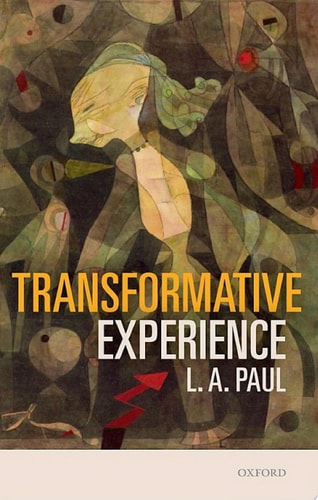
Transformative Experience
0
0
As an Amazon Associate and affiliate partner, Menrva Books earns from qualifying purchases. Learn more
Author Description
As we live our lives, we repeatedly make decisions that shape our future circumstances and affect the sort of person we will be. When choosing whether to start a family, or deciding on a career, we often think we can assess the options by imagining what different experiences would be like for us. L. A. Paul argues that, for choices involving dramatically new experiences, we are confronted by the brute fact that we can know very little about our subjective futures. This has serious implications for our decisions. If we make life choices in the way we naturally and intuitively want to--by considering what we care about, and what our future selves will be like if we choose to have the experience--we only learn what we really need to know after we have already committed ourselves. If we try to escape the dilemma by avoiding an experience, we have still made a choice. Choosing rationally, then, may require us to regard big life decisions as choices to make discoveries, small and large, about the intrinsic nature of experience, and to recognize that part of the value of living authentically is to experience one's life and preferences in whatever way they may evolve in the wake of the choices you make. Using classic philosophical examples about the nature of consciousness, and drawing on recent work in normative decision theory, cognitive science, epistemology, and the philosophy of mind, Paul develops a rigorous account of transformative experience that sheds light on how we should understand real-world experience and our capacity to rationally map our subjective futures.
Menrva's Summary
THE THESIS
This book investigates the fundamental problem of how individuals can make rational decisions when faced with life-altering experiences that are epistemically and personally transformative. L. A. Paul, a professor of philosophy, utilizes a framework grounded in normative decision theory and the philosophy of mind to challenge the traditional model of rational choice. She argues that because certain experiences fundamentally change one's subjective preferences and identity, they cannot be evaluated through standard imaginative projection. The text proposes that authentic living requires embracing these choices as acts of discovery rather than calculated outcomes.
THE SCOPE MAP
What You Will Find
- Analysis of transformative experiences that alter subjective preferences and identity.
- Application of normative decision theory to real-world life choices.
- Integration of cognitive science and epistemology to explain the limits of imagination.
- Philosophical examination of consciousness and the nature of the self.
Scope Limits
- The text does not provide a practical step-by-step guide for specific career or personal decision-making.
- It does not offer a resolution to the problem of free will in the context of deterministic outcomes.
THE AUTHORITY PERSPECTIVE
Experts in philosophy and decision theory identify this work as a significant contribution to the study of rationality and personal identity. Readers frequently note the academic density of the prose, which requires a high level of engagement with formal philosophical arguments.
Page Count:
208
Publication Date:
2014-01-01
Publisher:
OUP Oxford
ISBN-10:
0191027812
ISBN-13:
9780191027819
Philosophy
Experience
Epistemology
Philosophy of
Decision Making
Ethics
Decision Theory
Community Tags
Similar Books