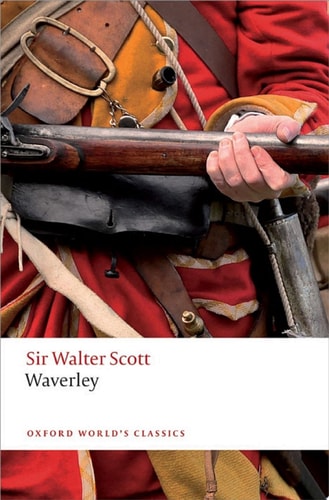
Waverley
0
0
As an Amazon Associate and affiliate partner, Menrva Books earns from qualifying purchases. Learn more
Author Description
'the most romantic parts of this narrative are precisely those which have a foundation in fact' Edward Waverley, a young English soldier in the Hanoverian army, is sent to Scotland where he finds himself caught up in events that quickly transform from the stuff of romance into nightmare. His character is fashioned through his experience of the Jacobite rising of 1745-6, the last civil war fought on British soil and the unsuccessful attempt to reinstate the Stuart monarchy, represented by Prince Charles Edward. Waverley's love for the spirited Flora MacIvor and his romantic nature increasingly pull him towards the Jacobite cause, and test his loyalty to the utmost. With Waverley, Scott invented the historical novel in its modern form and profoundly influenced the development of the European and American novel for a century at least. Waverley asks the reader to consider how history is shaped, who owns it, and what it means to live in it - questions as vital at the beginning of the twenty-first century as the nineteenth.
Menrva's Summary
THE PULSE
Edward Waverley, a young English soldier, finds his loyalties fractured when he becomes entangled in the Jacobite rising of 1745. Stationed in Scotland, Waverley transitions from a detached observer of romanticized Highland culture to an active participant in a violent political insurrection. His objective is to reconcile his personal affections for the Jacobite cause with his professional duty to the Hanoverian army. The narrative framework utilizes a third-person perspective that balances intimate character development with the broader, chaotic movements of civil war. The world is defined by the rigid social structures of the British military and the fading, traditionalist customs of the Scottish clans.
INSIDE THE PAGES
- Detailed depiction of the 1745 Jacobite rising
- Exploration of the conflict between romantic idealism and political reality
- Contrast between English urban life and Scottish Highland culture
- Use of historical figures alongside fictional protagonists
- Focus on the psychological development of a young soldier
- Integration of regional dialect and cultural customs
- Examination of the transition from feudalism to modern statehood
- Influence on the structure of the modern historical novel
THE COLLECTIVE ECHO
Readers and critics frequently identify this work as the foundational text for the modern historical novel. Discussion often centers on the author's ability to synthesize meticulous historical research with a compelling personal narrative. Many highlight the effective contrast between the protagonist's romanticized expectations and the brutal, messy reality of civil conflict. The pacing is often noted for its deliberate, descriptive style which prioritizes atmosphere and cultural context over rapid action. Scholars emphasize that the text remains a primary reference point for understanding how literature shapes national identity and historical memory.
Page Count:
544
Publication Date:
2015-01-01
Publisher:
OUP Oxford
ISBN-10:
0191025976
ISBN-13:
9780191025976
Adventure
Political fiction
classic
English
18th century
Historical
English & College Success
Community Tags
Other Editions(6)



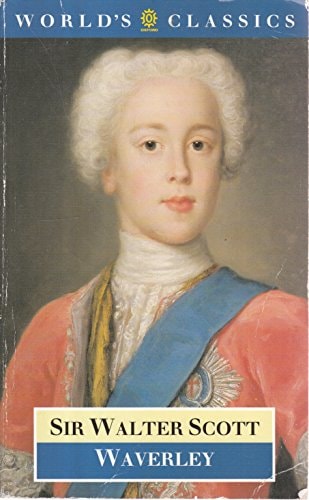
Similar Books



Reader Comments
Share Your Thoughts
No comments yet. Be the first to share your thoughts!