Robinson Crusoe
Author Description
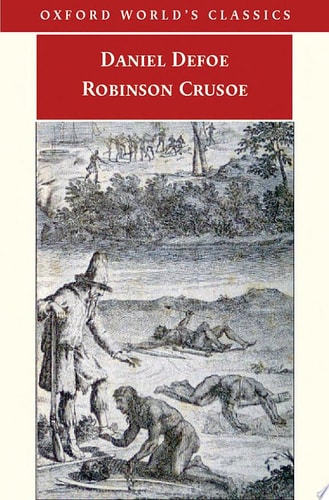
'I made him know his Name should be Friday, which was the Day I sav'd his Life...I likewise taught him to say Master' Robinson Crusoe's seafaring adventures are abruptly ended when he is shipwrecked, the solitary survivor on a deserted island. He gradually creates a life for himself, building a house, cultivating the land, and making a companion from the native whose life he saves. Daniel Defoe's enthralling story-telling and imaginatively detailed descriptions have ensured that his fiction masquerading as fact remains one of the most famous stories in English literature. On one level a simple adventure story, the novel also raises profound questions about moral and spiritual values, society, and man's abiding acquisitiveness. This new edition includes a scintillating Introduction and notes that illuminate the historical context. ABOUT THE SERIES: For over 100 years Oxford World's Classics has made available the widest range of literature from around the globe. Each affordable volume reflects Oxford's commitment to scholarship, providing the most accurate text plus a wealth of other valuable features, including expert introductions by leading authorities, helpful notes to clarify the text, up-to-date bibliographies for further study, and much more.
Menrva's Summary
THE PULSE
A shipwrecked sailor finds himself the sole survivor on a desolate island, forced to confront the limits of human endurance and isolation. Robinson Crusoe struggles to establish a functional existence through ingenuity and labor, transforming his environment into a structured homestead. His objective is survival and the maintenance of his sanity, which are challenged by the harsh physical realities of the island and his own internal spiritual conflicts. The narrative is presented as a first-person journal, documenting his daily efforts to master his surroundings and his eventual encounter with a companion he names Friday.
INSIDE THE PAGES
- Epistolary narrative structure presented as a personal journal
- Detailed descriptions of primitive engineering and agriculture
- Exploration of colonial and imperialist attitudes
- Examination of religious conversion and spiritual introspection
- Focus on the psychological effects of prolonged solitude
- Use of realistic, matter-of-fact prose to simulate non-fiction
- Development of a master-servant dynamic between the protagonist and Friday
- Integration of moral and philosophical inquiries regarding human nature
THE COLLECTIVE ECHO
Readers and critics frequently analyze this work as a foundational text for the survival genre and the development of the English novel. Discussion often centers on the protagonist's resourcefulness and the complex power dynamics inherent in his relationship with Friday. Scholars highlight the text's ability to blend realistic detail with allegorical themes concerning society and individual acquisitiveness. Many readers note that the pacing reflects the slow, methodical nature of Crusoe's daily life on the island. The work remains a subject of debate regarding its historical context and its influence on subsequent literature concerning isolation and human agency.
Page Count:
377
Publication Date:
2007-01-01
Publisher:
OUP Oxford
ISBN-10:
0191579408
ISBN-13:
9780191579400
Adventure
English
classic
18th century
Survival
Historical
English & College Success
Community Tags
Similar Books