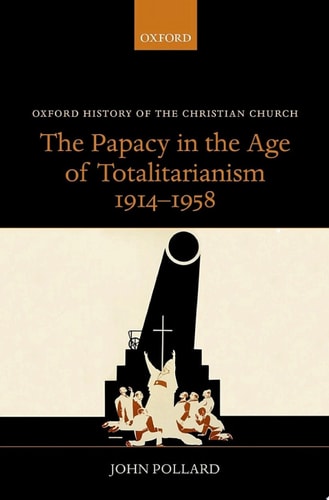
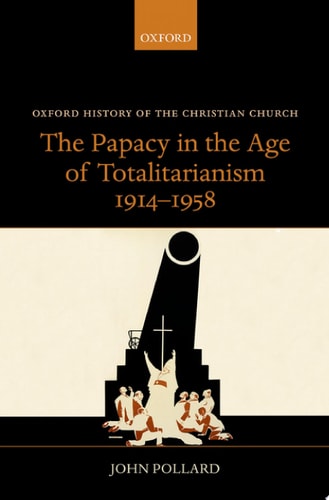
The Papacy in the Age of Totalitarianism, 1914-1958
0
0
As an Amazon Associate and affiliate partner, Menrva Books earns from qualifying purchases. Learn more
Author Description
The Papacy in the Age of Totalitarianism, 1914-1958 examines the most momentous years in papal history. Popes Benedict XV (1914-1922), Pius XI (1922-1939), and Pius XII (1939-1958) faced the challenges of two world wars and the Cold War, and threats posed by totalitarian dictatorships like Italian Fascism, German National Socialism, and Communism in Russia and China. The wars imposed enormous strains upon the unity of Catholics and the hostility of the totalitarian regimes to Catholicism lead to the Church facing persecution and martyrdom on a scale similar to that experienced under the Roman Empire and following the French Revolution. At the same time, these were years of growth, development, and success for the papacy. Benedict healed the wounds left by the 'modernist' witch hunt of his predecessor and re-established the papacy as an influence in international affairs through his peace diplomacy during the First World War. Pius XI resolved the 'Roman Question' with Italy and put papal finances on a sounder footing. He also helped reconcile the Catholic Church and science by establishing the Pontifical Academy of Sciences and took the first steps to move the Church away from entrenched anti-Semitism. Pius XI continued his predecessor's policy of the 'indigenisation' of the missionary churches in preparation for de-colonisation. Pius XII fully embraced the media and other means of publicity, and with his infallible promulgation of the Assumption in 1950, he took papal absolutism and centralism to such heights that he has been called the 'last real pope'. Ironically, he also prepared the way for the Second Vatican Council.
Menrva's Summary
THE THESIS
This work investigates how the papacy navigated the existential threats posed by the rise of totalitarian regimes and the global conflicts of the early twentieth century. John Albert Pollard, a historian specializing in the Vatican, utilizes extensive archival research and diplomatic records to analyze the administrative and political strategies of Benedict XV, Pius XI, and Pius XII. The text argues that these popes balanced internal ecclesiastical reform with the external pressures of Fascism, National Socialism, and Communism, ultimately shaping the modern institutional structure of the Church.
THE SCOPE MAP
What You Will Find
- Analysis of papal diplomacy during World War I and World War II.
- Examination of the 'Roman Question' and the Lateran Treaty.
- Evaluation of missionary expansion and the 'indigenisation' of the Church.
- Documentation of the centralization of papal authority under Pius XII.
Scope Limits
- The text does not provide a comprehensive theological history of the period.
- It focuses primarily on the political and administrative actions of the papacy rather than the lived experiences of the global laity.
THE AUTHORITY PERSPECTIVE
Scholars recognize this volume as a definitive academic account of the Vatican's political maneuvers during the mid-twentieth century. Readers frequently note the high density of the prose and the rigorous reliance on diplomatic history to explain complex institutional shifts.
Page Count:
560
Publication Date:
2014-01-01
Publisher:
OUP Oxford
ISBN-10:
0191026581
ISBN-13:
9780191026584
Religion
Biography
History
Papacy history
Christianity
European History
Community Tags
Other Editions(2)
Similar Books