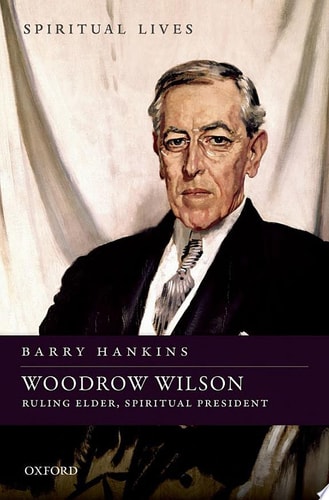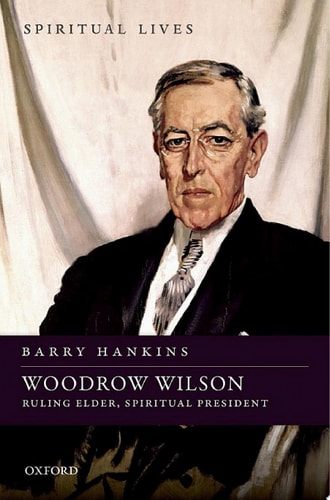
Woodrow Wilson: Ruling Elder, Spiritual President
0
0
As an Amazon Associate and affiliate partner, Menrva Books earns from qualifying purchases. Learn more
Author Description
When Woodrow Wilson was elected as a ruling elder in the Presbyterian Church in 1897, his preacher father allegedly remarked, "I would rather that he held that position than be president of the United States." Fifteen years later he was both. Easily one of the most religious presidents in American history, almost all of Wilson's policies and important speeches were infused with religious concepts. The son, grandson, and nephew of southern Presbyterian divines, with six consecutive generations of preachers on his mother's side, Wilson viewed his political career as a sacred calling. As he remarked to a Democratic Party leader just before his inauguration in 1913, "God ordained that I should be the next president of the United States." As a scholar, Princeton University president, governor of New Jersey, then president, Wilson spent his entire career trying to further the cause of public righteousness. In 1905, he uttered his life's credo: "There is a mighty task before us and it welds us together. It is to make the United States a mighty Christian nation and to Christianize the World." Nonetheless, the 28th president was not principally a religious figure, and he didn't fit comfortably in any religious camp, either in his own time or today. In Woodrow Wilson: Ruling Elder, Spiritual President, Barry Hankins tells the story of Wilson's religion as he moved from the Calvinist orthodoxy of his youth to a progressive, spiritualized religion short on doctrine and long on morality.
Menrva's Summary
THE THESIS
This book investigates the intersection of Woodrow Wilson's deep-seated Presbyterian faith and his political career, questioning how his religious upbringing shaped his vision for American governance. Barry Hankins, a professor of history and director of graduate studies, utilizes archival research and Wilson's personal correspondence to argue that Wilson viewed his political trajectory as a divine mandate. The text traces the evolution of Wilson's belief system from strict Calvinist orthodoxy to a broader, morality-focused progressivism that defined his presidency.
THE SCOPE MAP
What You Will Find
- Analysis of Wilson's family history and the influence of Southern Presbyterianism
- Examination of Wilson's academic career at Princeton and his tenure as Governor of New Jersey
- Evaluation of how religious rhetoric informed his major policy decisions and speeches
- Exploration of the transition from doctrinal faith to a spiritualized public morality
Scope Limits
- The book does not provide a comprehensive biography of Wilson's entire personal life or non-religious political maneuvers
- It does not focus on the geopolitical military strategies of World War I outside of their moral or religious justifications
THE AUTHORITY PERSPECTIVE
Scholars and historians recognize this work as a significant contribution to the study of religion in American political life. Readers frequently note the clarity with which Hankins navigates the complexities of Wilson's evolving theological views.
Page Count:
246
Publication Date:
2016-01-01
Publisher:
OUP Oxford
ISBN-10:
0191028185
ISBN-13:
9780191028182
History
Biography
Religion
Presbyterianism
American Politics
United States
American History