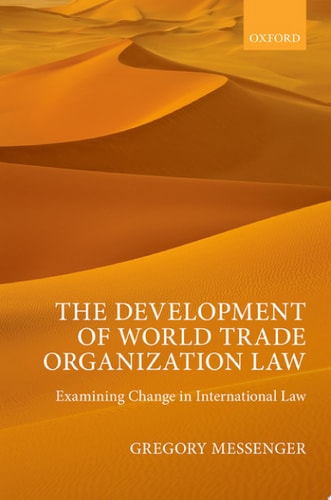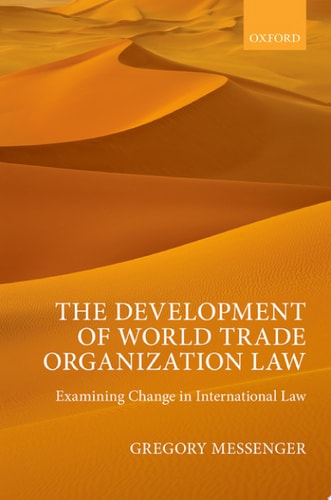
The Development of World Trade Organization Law: Examining Change in International Law
0
0
As an Amazon Associate and affiliate partner, Menrva Books earns from qualifying purchases. Learn more
Author Description
The World Trade Organization is a central player in international trade regulation. The rights and duties that form WTO law are not created in a vacuum, however, and there exists a complex network of domestic, regional and international influences on the development of WTO law that go beyond the disciplines found in the covered agreements or the interpretations given by panels and the Appellate Body. As such, understanding the development of WTO law in a wider institutional context is critical to comprehending WTO law in a new age of legal globalization. The Development of World Trade Organization Law: Examining Change in International Law examines the development of WTO law through an analysis of competing global actors, norms, and institutions. Taking a different approach to social-scientific or traditional legal models, this book argues that such globalized actors are the driving force behind the development of WTO law yet not in control of it. Identifying causal language as key to understanding this development, the volume examines three different causal influences: instrumental, systemic, and constitutive. It applies this causal methodology to three key areas of WTO law: safeguard measures, sanitary and phytosanitary measures, and subsidies. The volume provides detailed explanations of why the law has developed as it has and offers insights into the future functioning of the WTO system.
Menrva's Summary
THE THESIS
How do external actors, norms, and institutions influence the evolution of World Trade Organization law beyond the formal agreements and judicial interpretations? Gregory Messenger, a scholar in international law, posits that WTO law is not a static set of rules but a dynamic system shaped by competing global forces. By moving away from traditional legal models, the author introduces a causal framework—categorized into instrumental, systemic, and constitutive influences—to explain how global actors drive legal development without maintaining absolute control over the process.
THE SCOPE MAP
What You Will Find
- A causal methodology for analyzing international legal evolution.
- Application of the framework to safeguard measures, sanitary and phytosanitary measures, and subsidies.
- An institutional analysis of the interplay between domestic, regional, and international legal influences.
Scope Limits
- The text does not provide a comprehensive history of every WTO dispute or agreement.
- It does not offer a predictive model for future trade litigation outcomes.
THE AUTHORITY PERSPECTIVE
Legal scholars and practitioners identify this work as a sophisticated contribution to the study of international economic law. Experts frequently highlight the author's innovative use of causal language as a necessary tool for navigating the complexities of modern legal globalization.
Page Count:
300
Publication Date:
2016-01-01
Publisher:
Oxford University Press
ISBN-10:
0191025801
ISBN-13:
9780191025808
International Law
World Trade Organization
Trade Law
Legal Theory
Globalization